
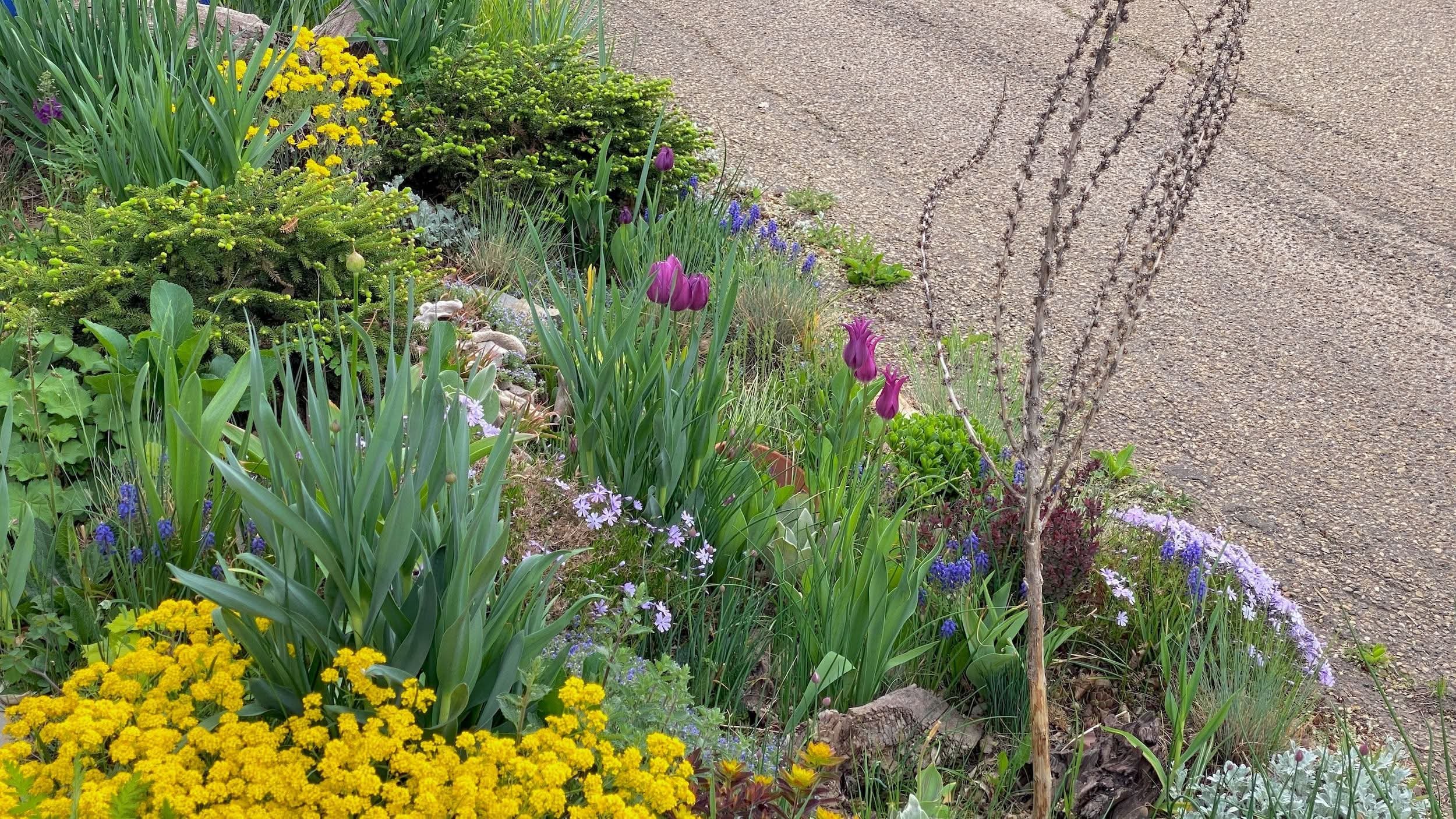
Hannemann Garden Tour Guide
Intro
Located in Edmonton, Alberta, The Hannemann Garden is a living experiment in naturalistic planting design.
Developed primarily by Nathaniel Hannemann, the garden has taken shape through design, horticulture, propagation, and long-term stewardship. Nathaniel’s work in the garden explores how plant-rich landscapes can create immersive, resilient, and ecologically rich spaces that evolve over time.
In the Hannemann Garden, the approach of naturalistic planting design is evident in layered plant communities informed by seasonality, plant compatibility, ecological succession, and human experience.
The intention of this guide is to provide you with expanded context, observations, and design notes for each zone throughout the property.
We invite you to take your time, move slowly, take photos, ask questions, and enjoy.
Nathaniel, Claire, and Nancy
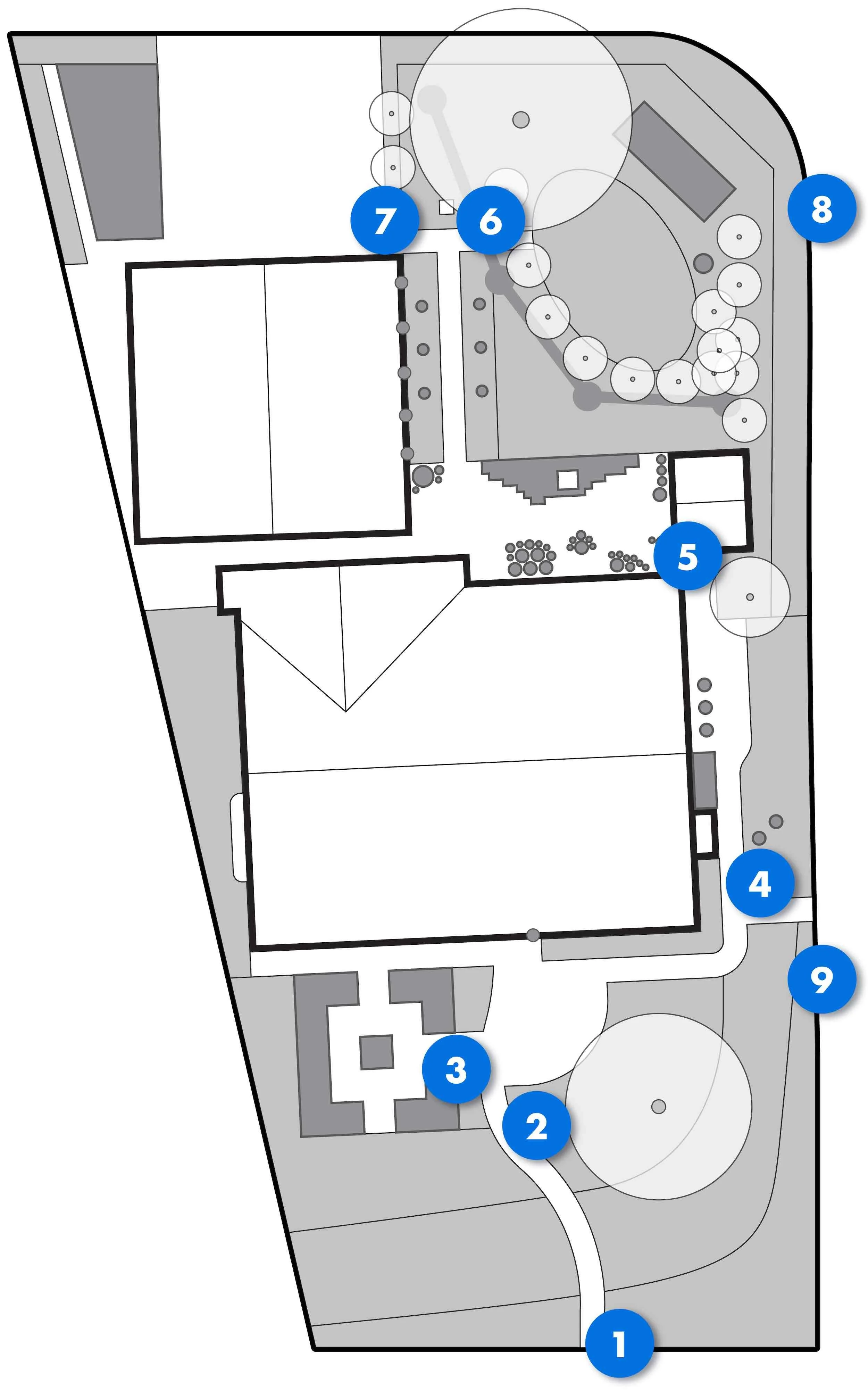
1 | Front Meadow
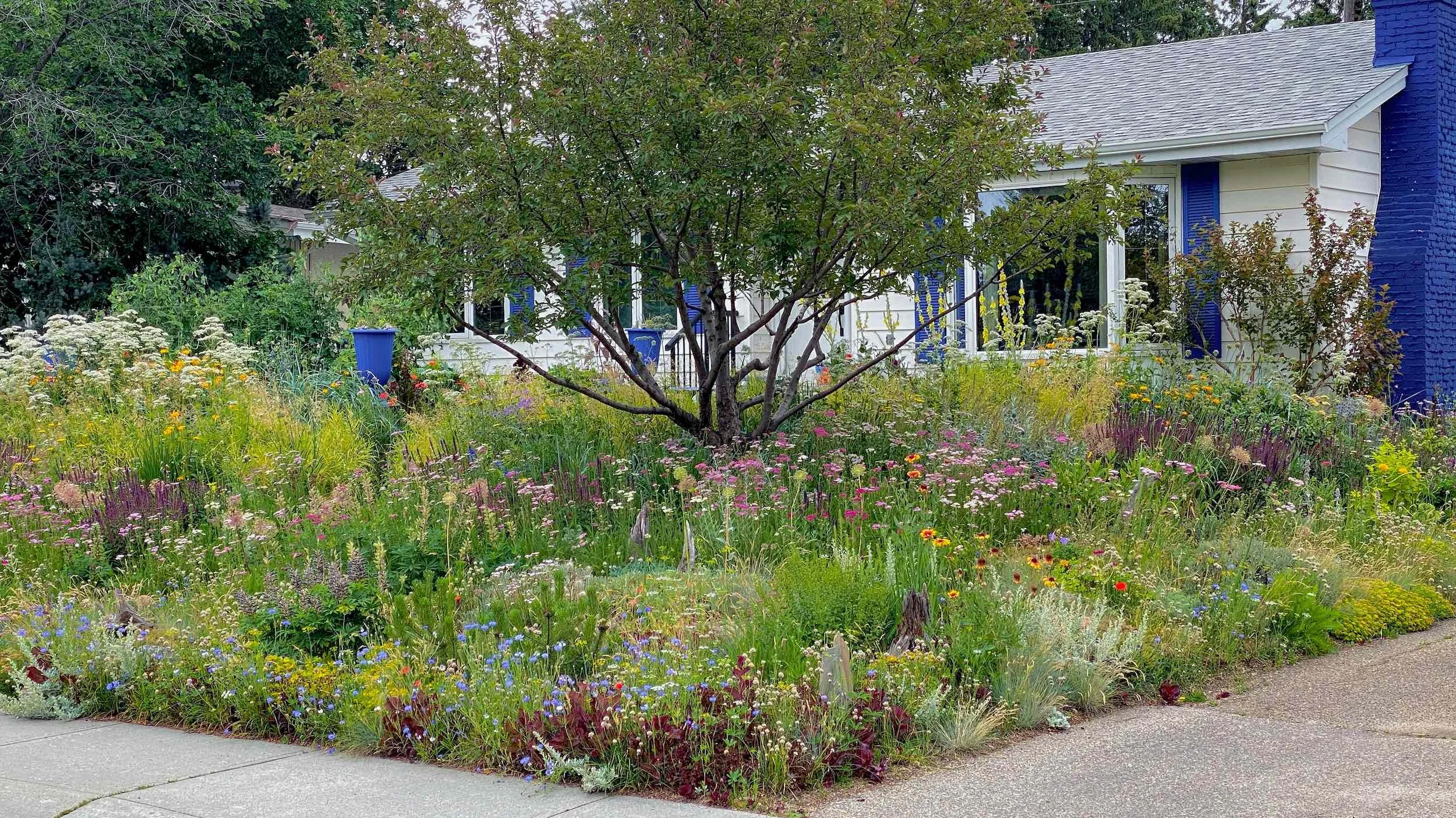
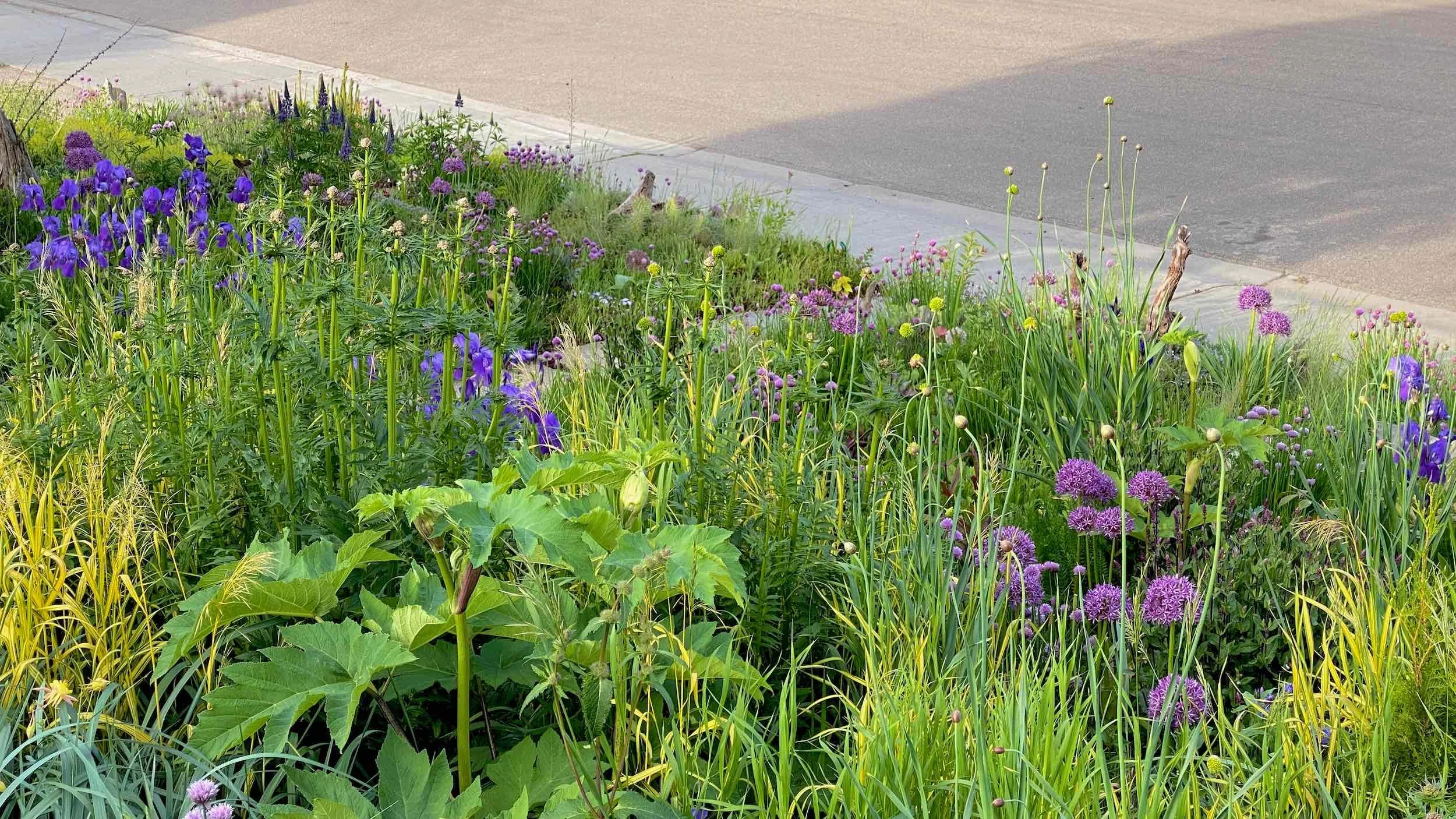
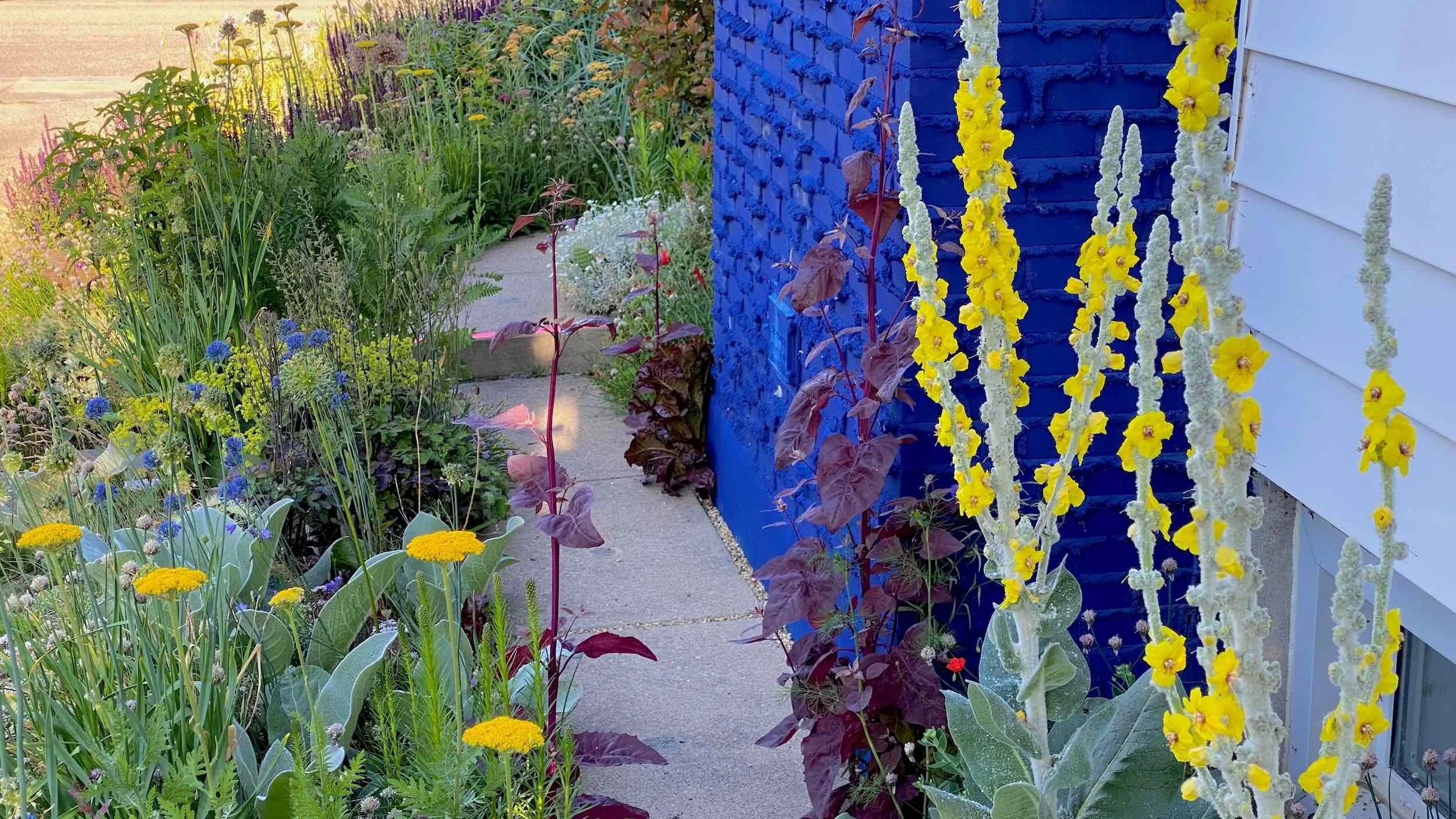
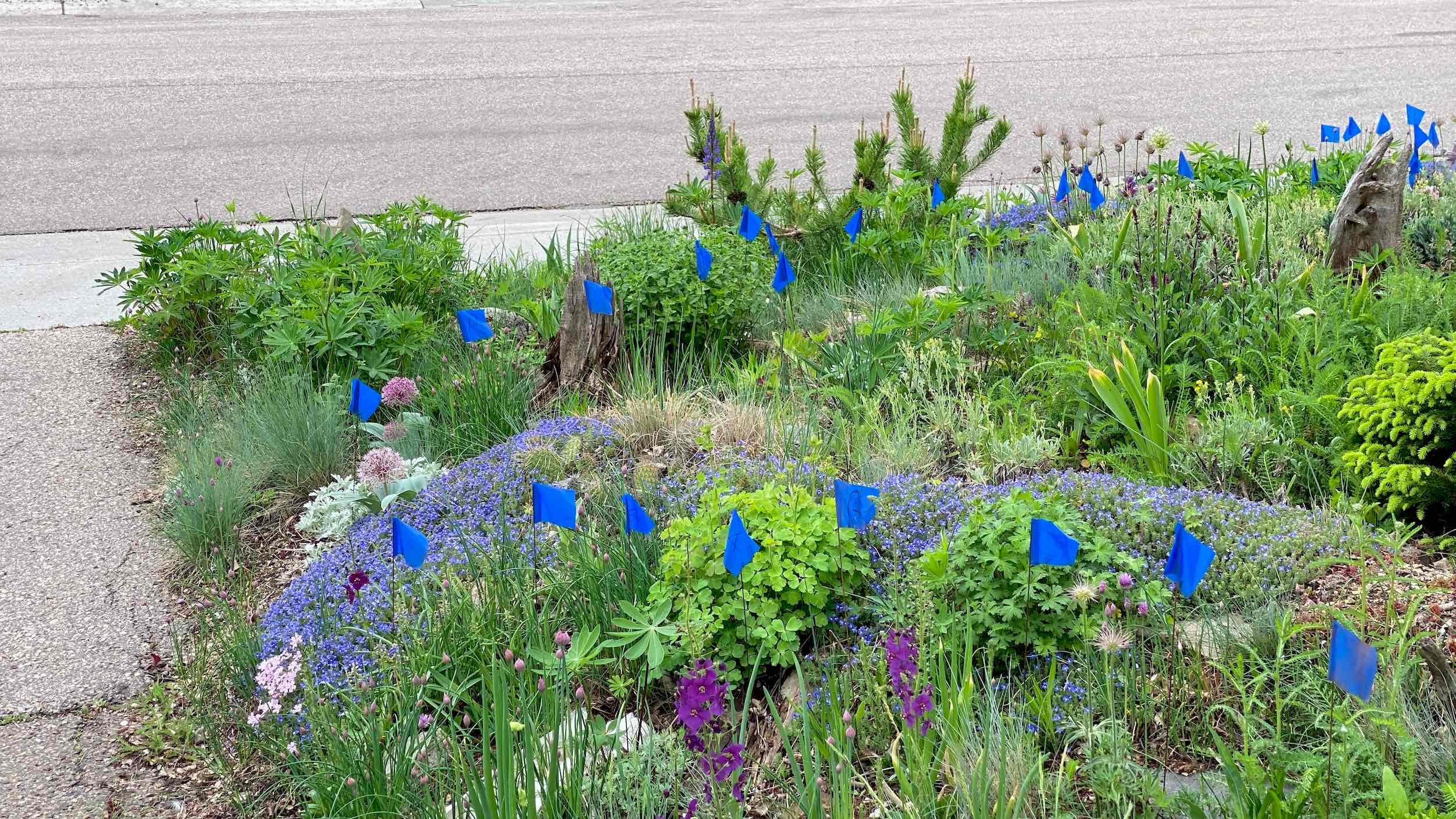
Public-facing and conspicuous, the Front Meadow is full of immersive detail. It demonstrates how a conventional front yard can become a rich, living system.
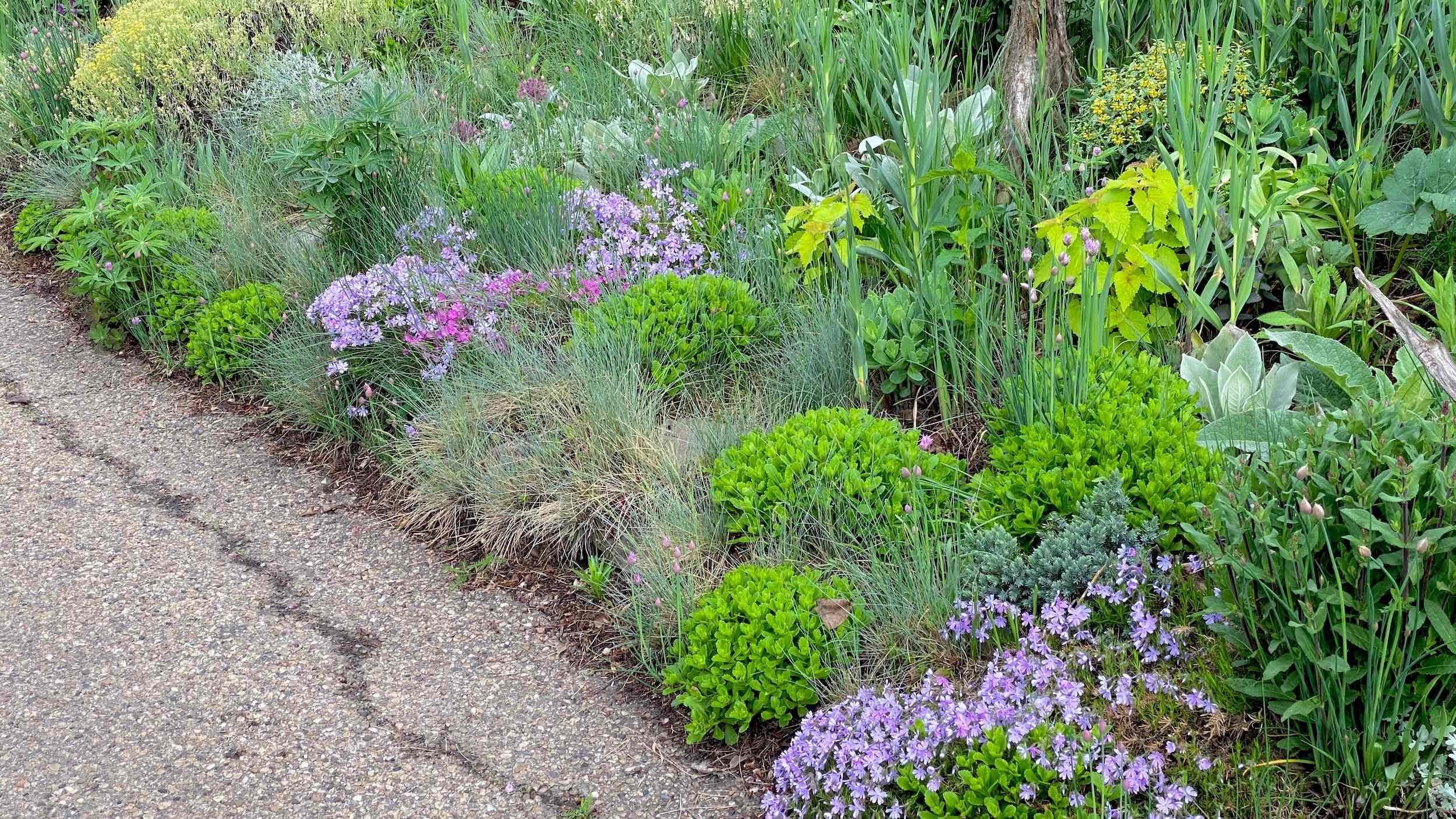
The Front Meadow is organized into three broad zones from the public sidewalk inward: the Steppe / Rock Garden, the Short Meadow, and the Tall Meadow. A shorter, drier, more exposed planting near the street, transitions to taller grasses and floriferous plants closer to the house. A large ornamental crabapple provides shade, fruit for birds, and a strong visual anchor.
This meadow was not made by randomly planting and scattering seeds. It was created in one mass planting of thousands of plugs and bulbs, then selectively seeded and edited over time. Closely spaced plants cover the soil as a living mulch, while a dense variety of species facilitates abundance.
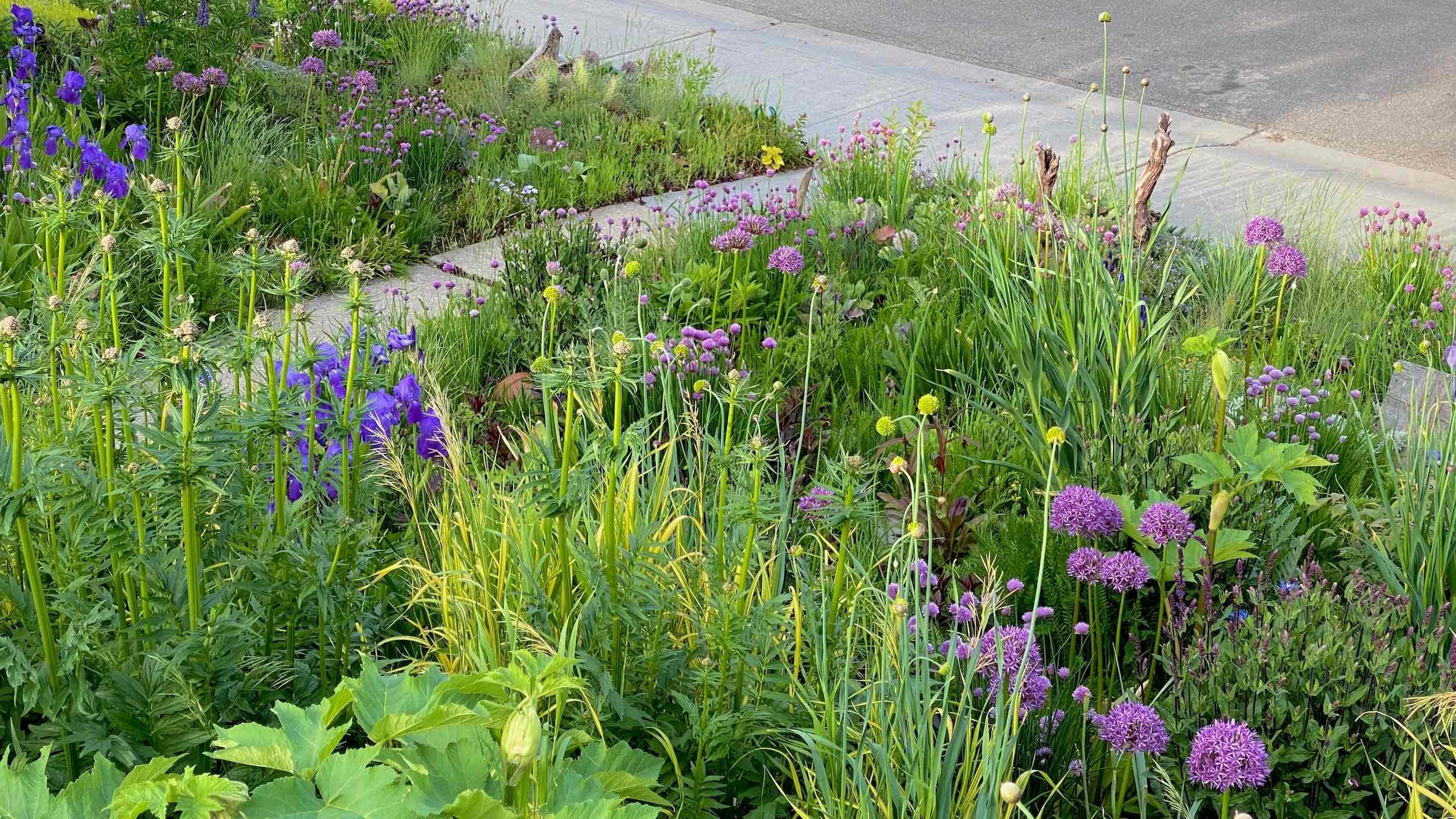
Look for repetition across the meadow. The garden contains a great deal of diversity, but recurring forms, textures, and colours in layered compositions help it feel cohesive, lush, and made for slow-looking.
2 | Garden Living
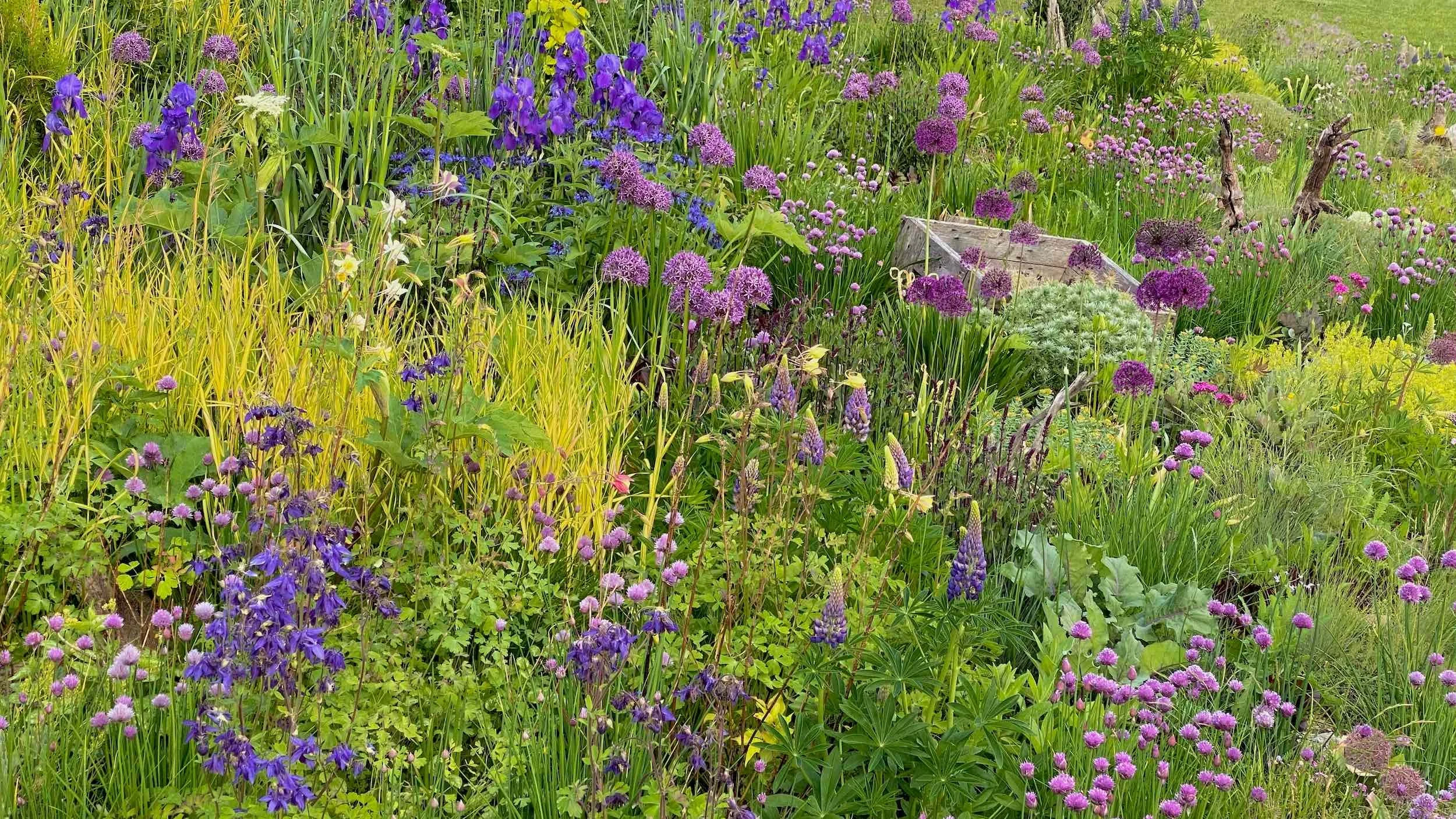
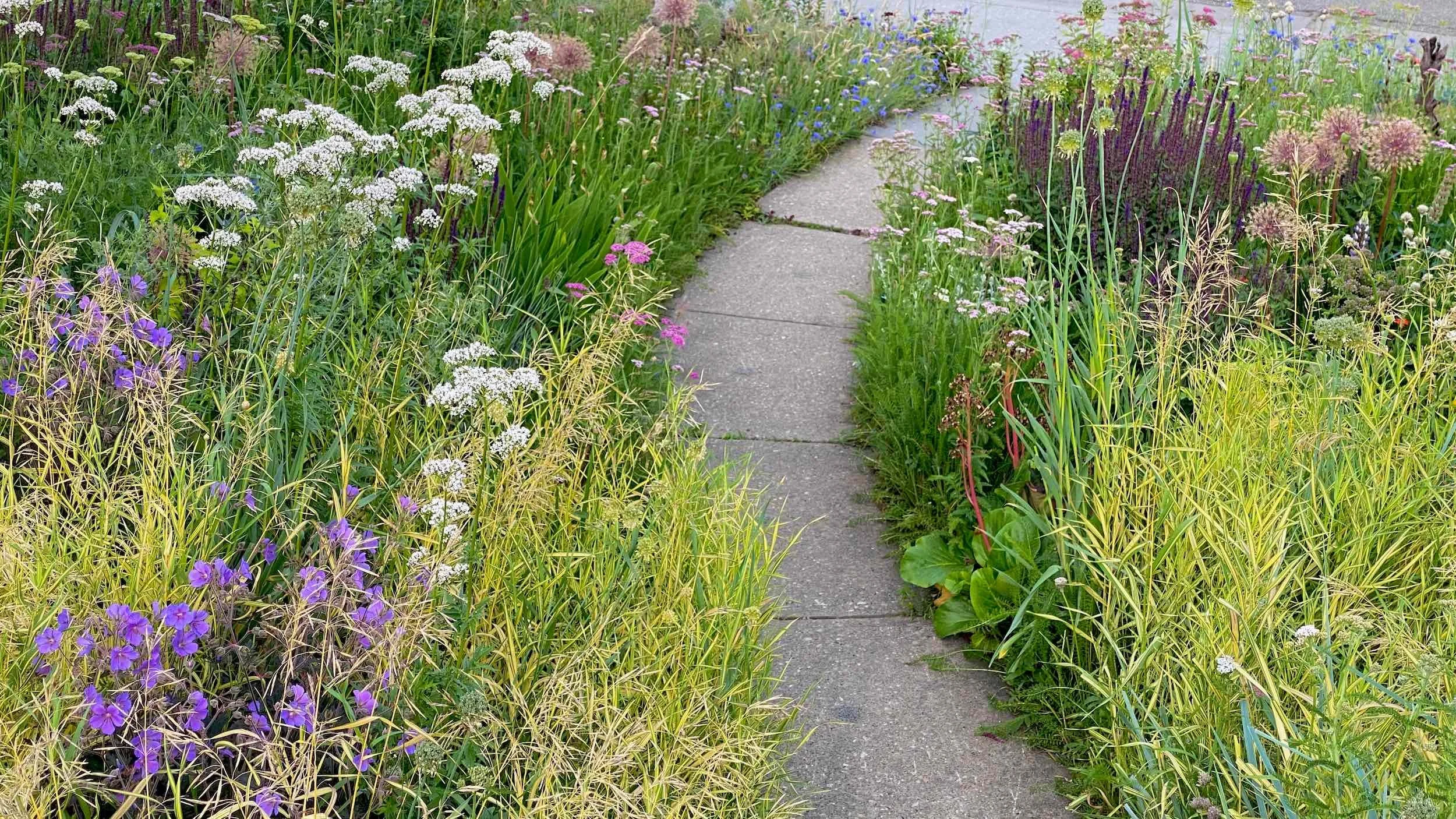
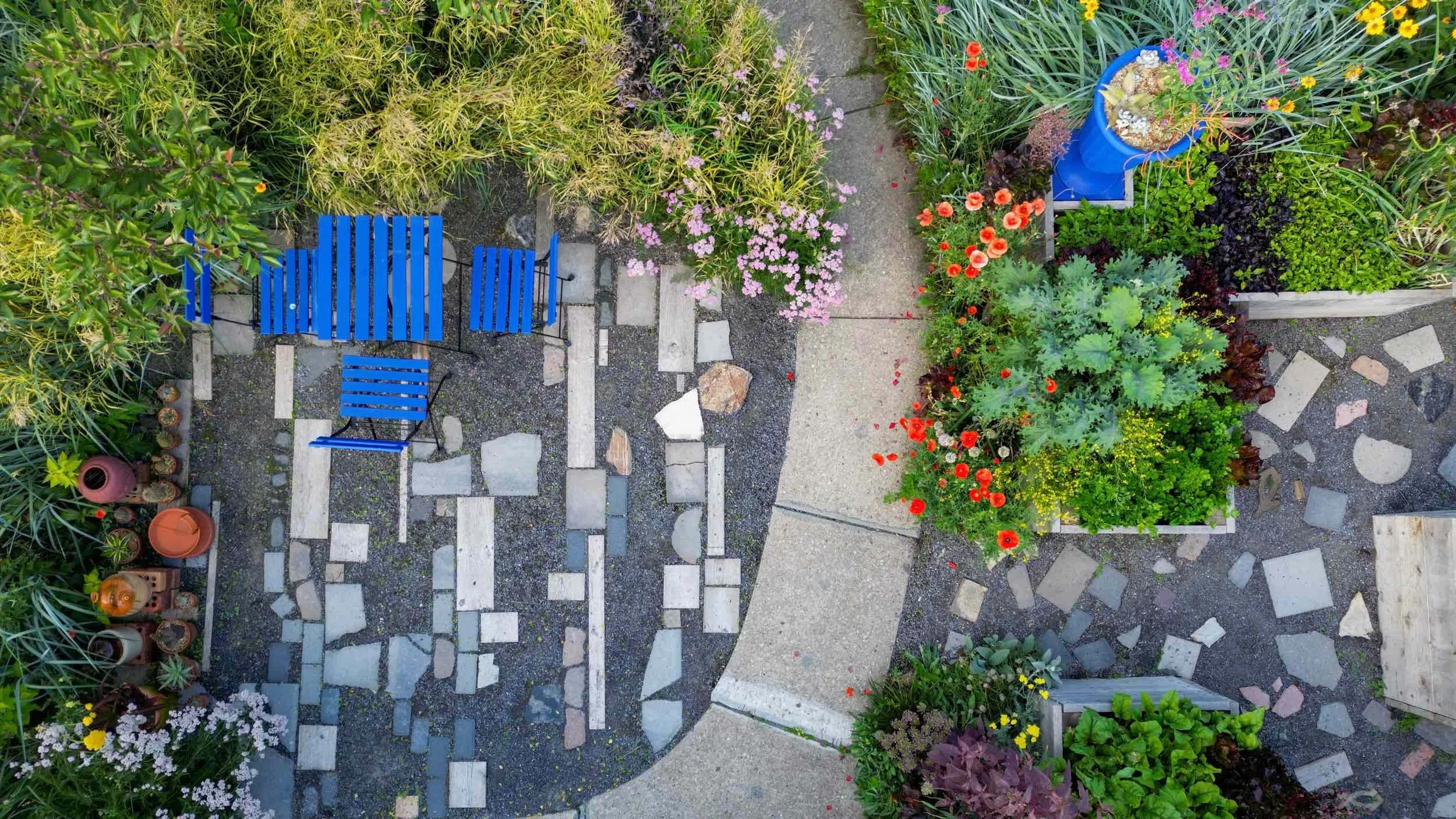
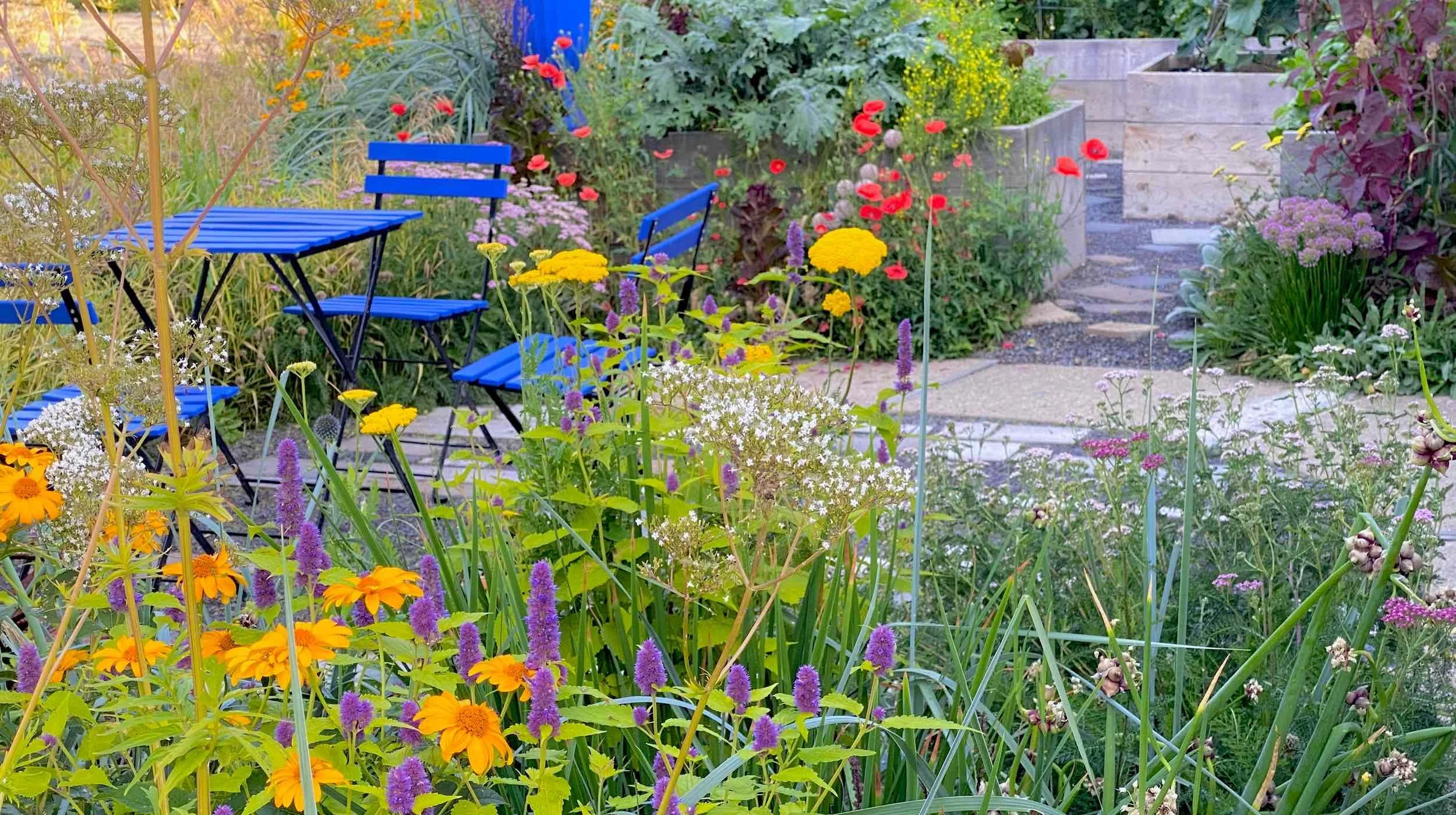
This Garden Living space integrates daily activities within the plant-centric mosaic. The winding path that cuts through the meadow, interfaces human experiences with ecological processes. The patio, tucked into verdant planting and shaded by a mature crabapple tree, is a functional and restorative space, much like an outdoor living room. This area provides a staging ground for garden maintenance while hosting other activities such as daily meals, conversations with passersby, reading, and other hobbies. From this space, flowers opening, insects moving, birds feeding, grasses swaying, and the kiss of evening light can be enjoyed. This garden is an intimate habitat for many forms of life, including people.
3 | Kitchen Garden & Nursery
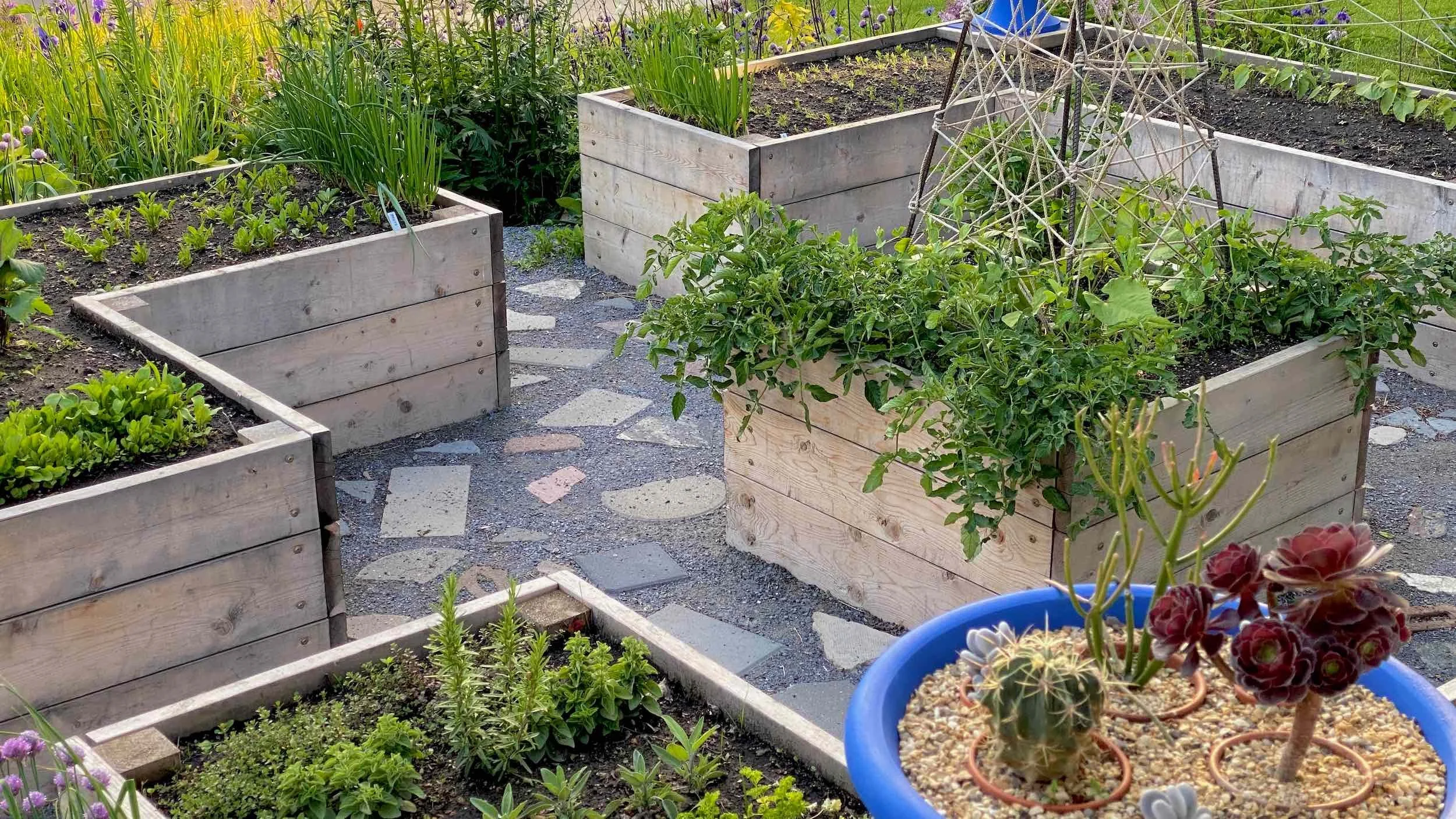
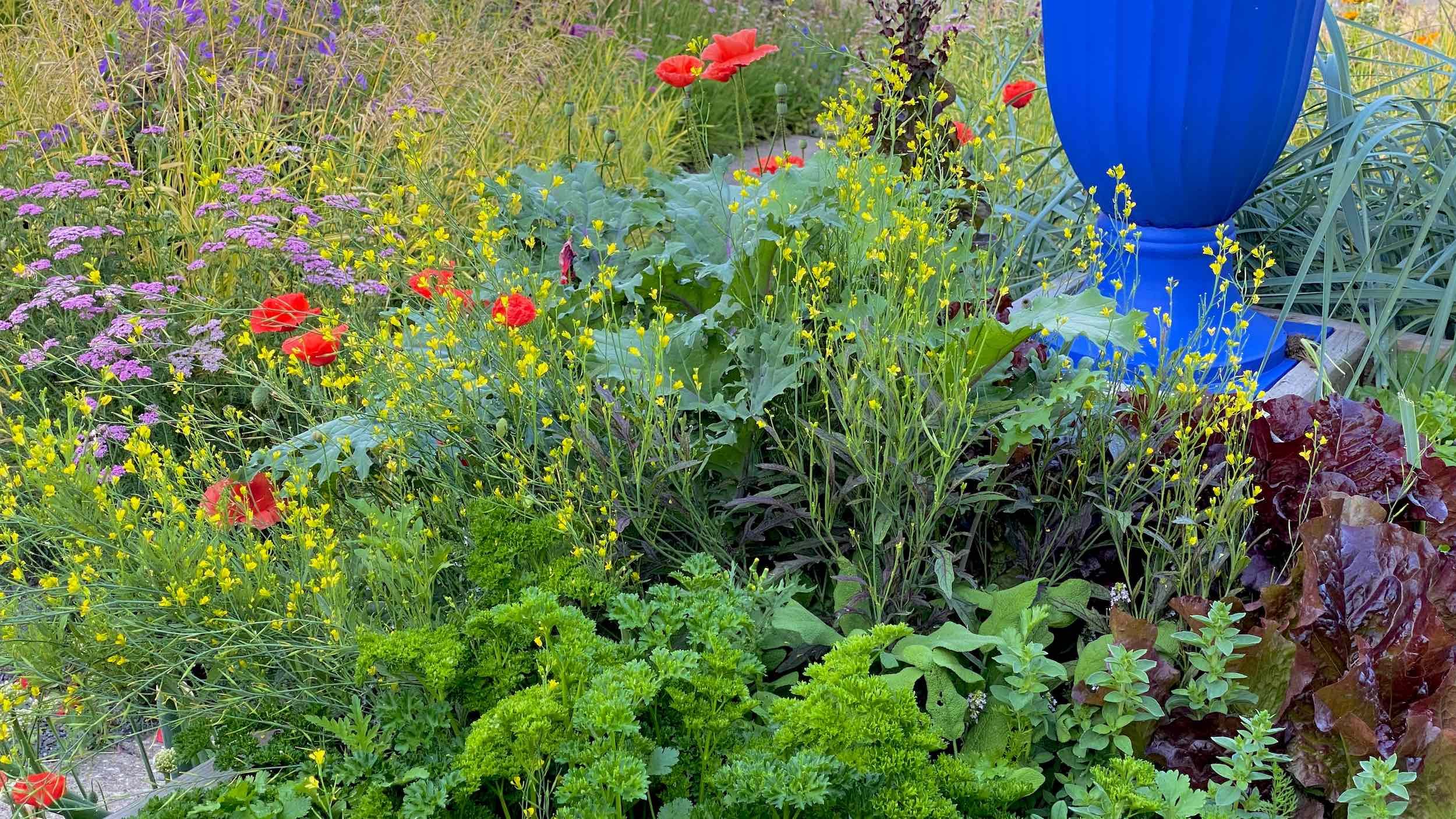
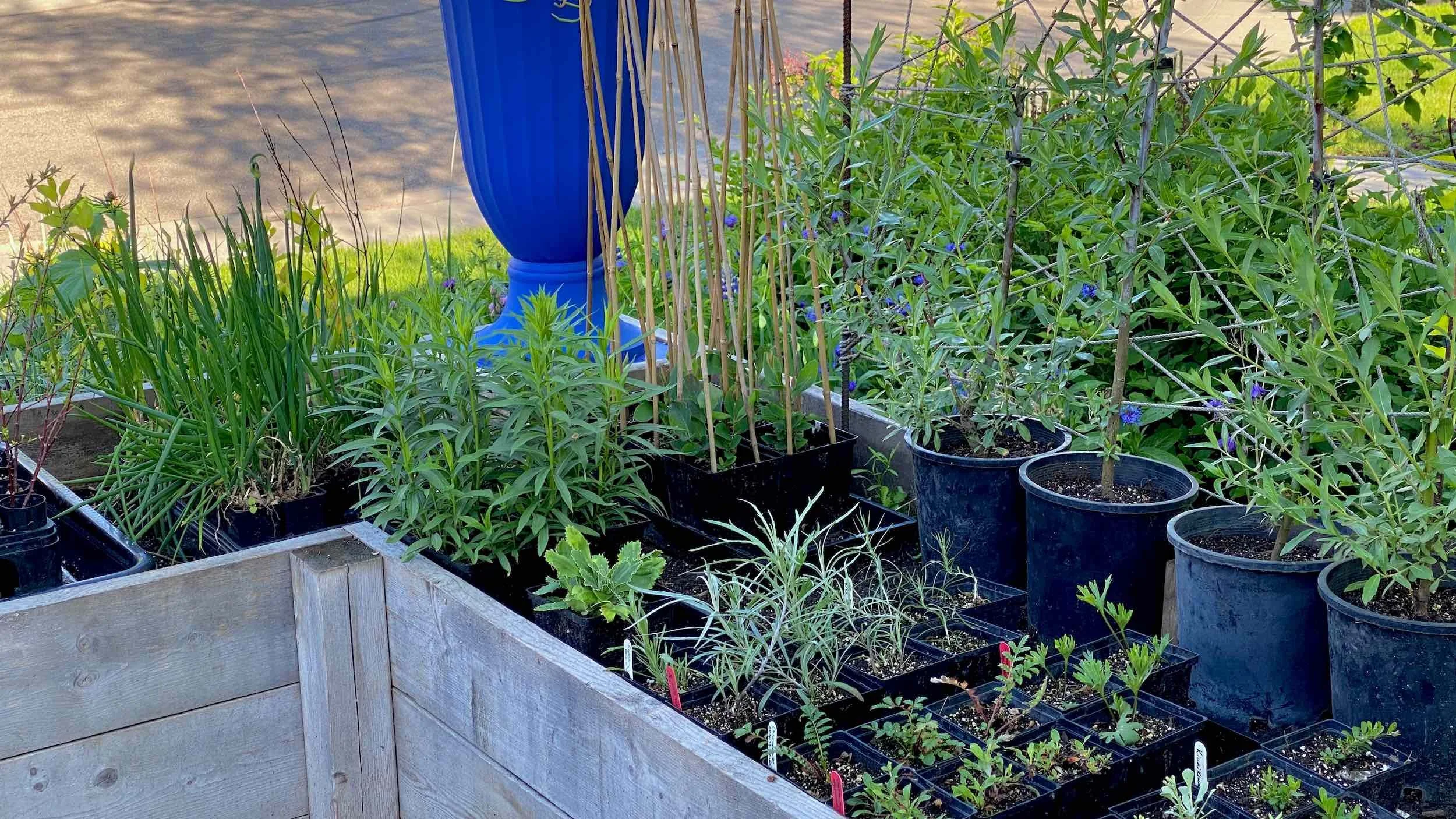
The Kitchen Garden and Nursery is a productive, domestic space, integrated into the larger front garden. Located close to the house’s front door, it enhances meal-time with vegetables and herbs grown for freshness, flavour, and easy access from the kitchen. Its classically inspired layout, along with blue painted urns, creates a unique, formal counterpoint to the adjacent naturalistic planting. This structured space helps connect and blend the home and garden. Depending on the season, the Kitchen Garden may also provide growing space for nursery stock or a place to overwinter potted plants once food crops have been harvested.
4 | Dry Edge
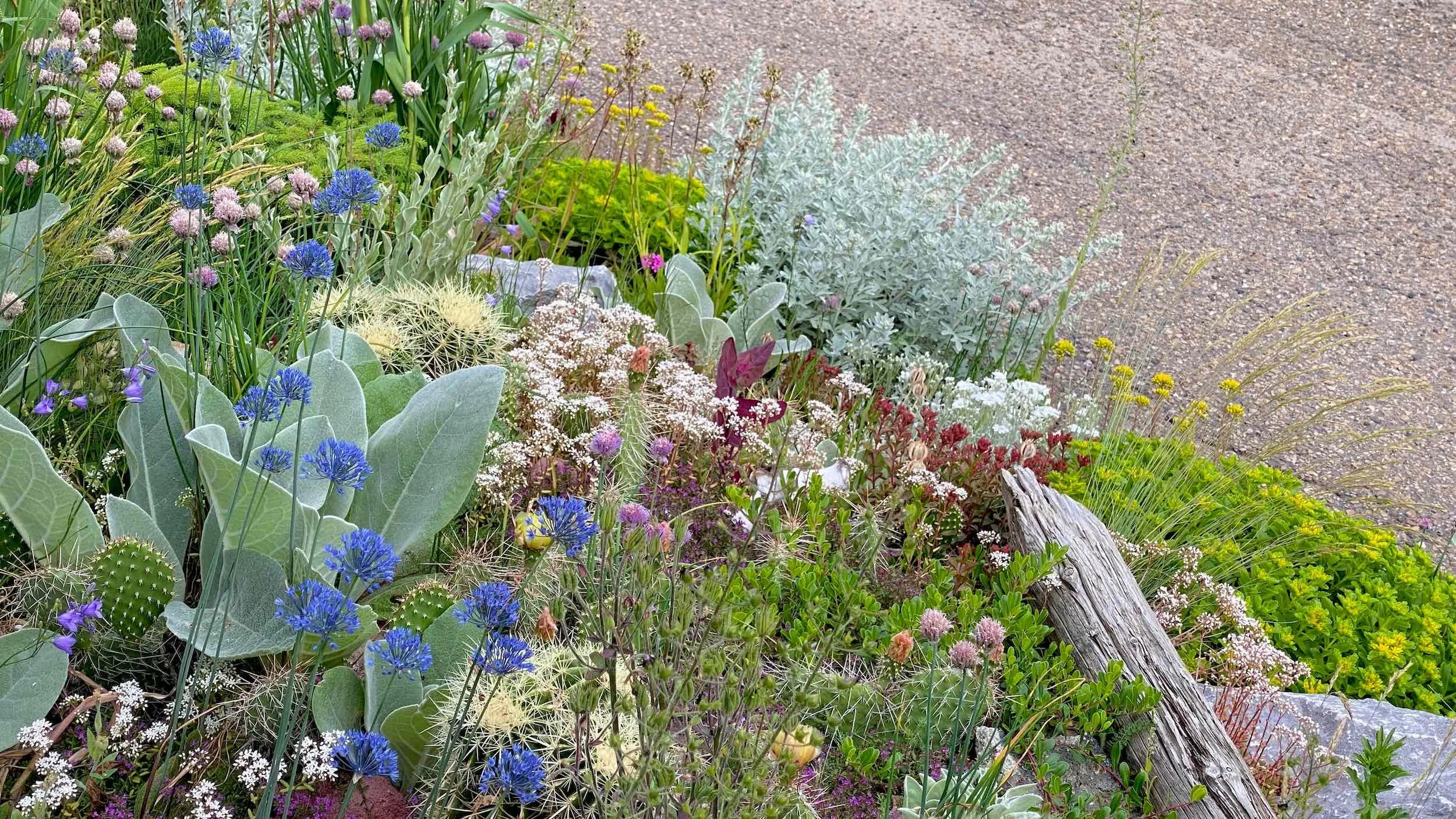
The Dry Edge is a narrow planting corridor located between the house and alley. It experiences intense heat, reflected sunlight, and drought stress.
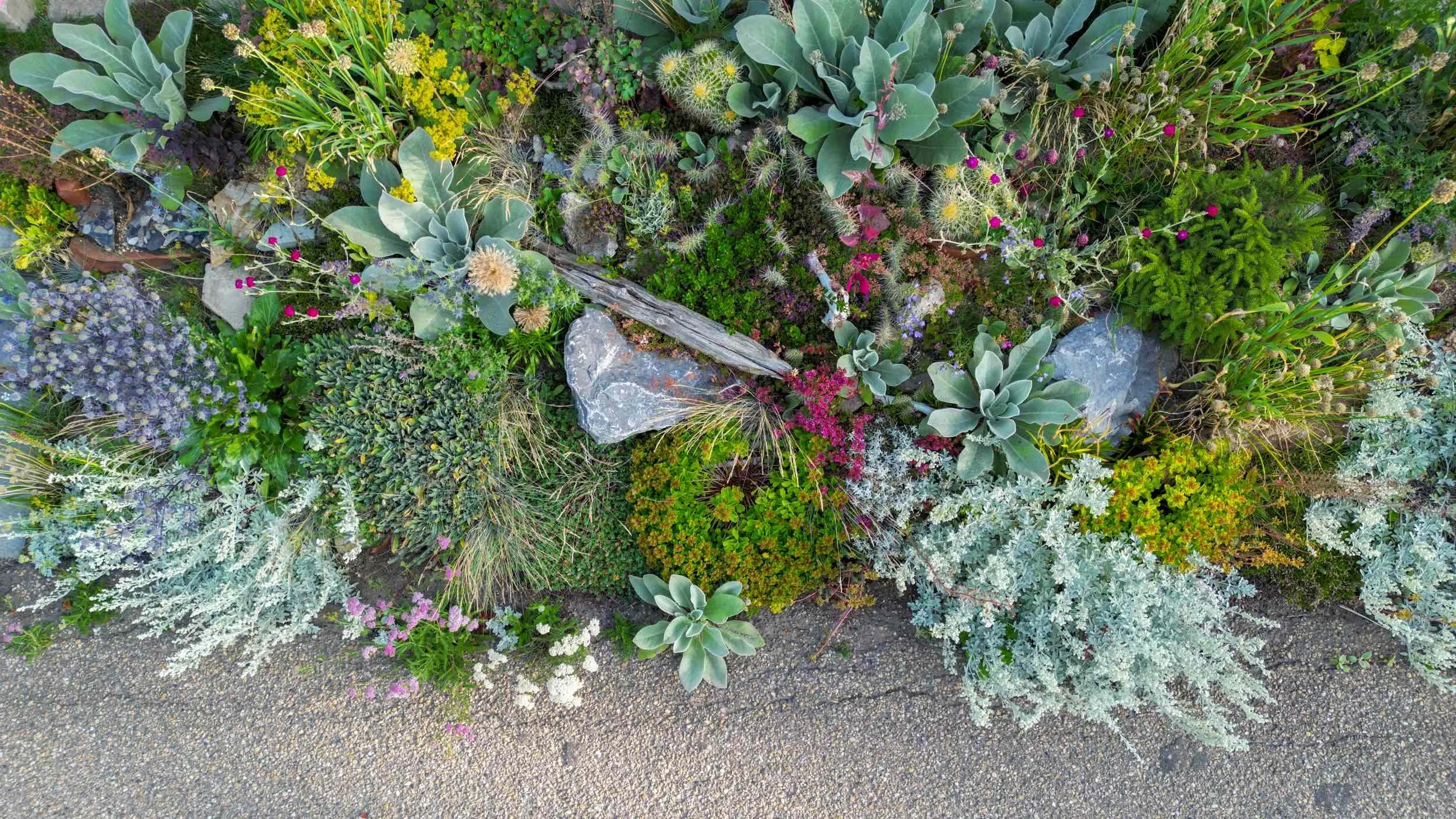
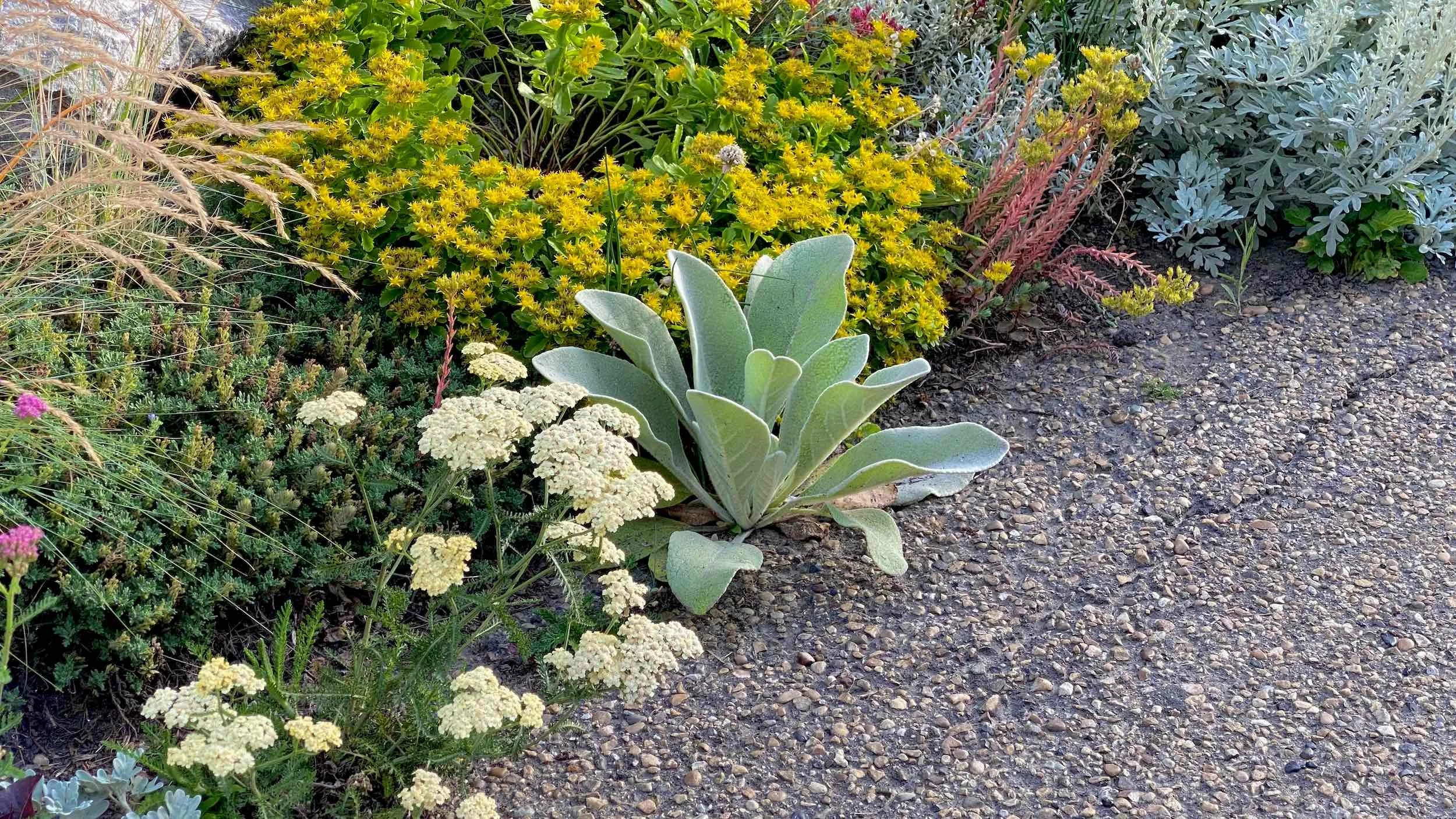
This space has been planted as a rugged, dryland rock garden with native prickly pear cacti, drought-tolerant perennials, ground covers, and bulbs, amidst boulders, bones, and weathered wood. This zone demonstrates that dry sites can become vibrant planting environments when plants are matched to environmental conditions. Drought tolerance does not have to mean visual or ecological scarcity. Difficult sites often contain enormous untapped potential.
5 | Patio Garden
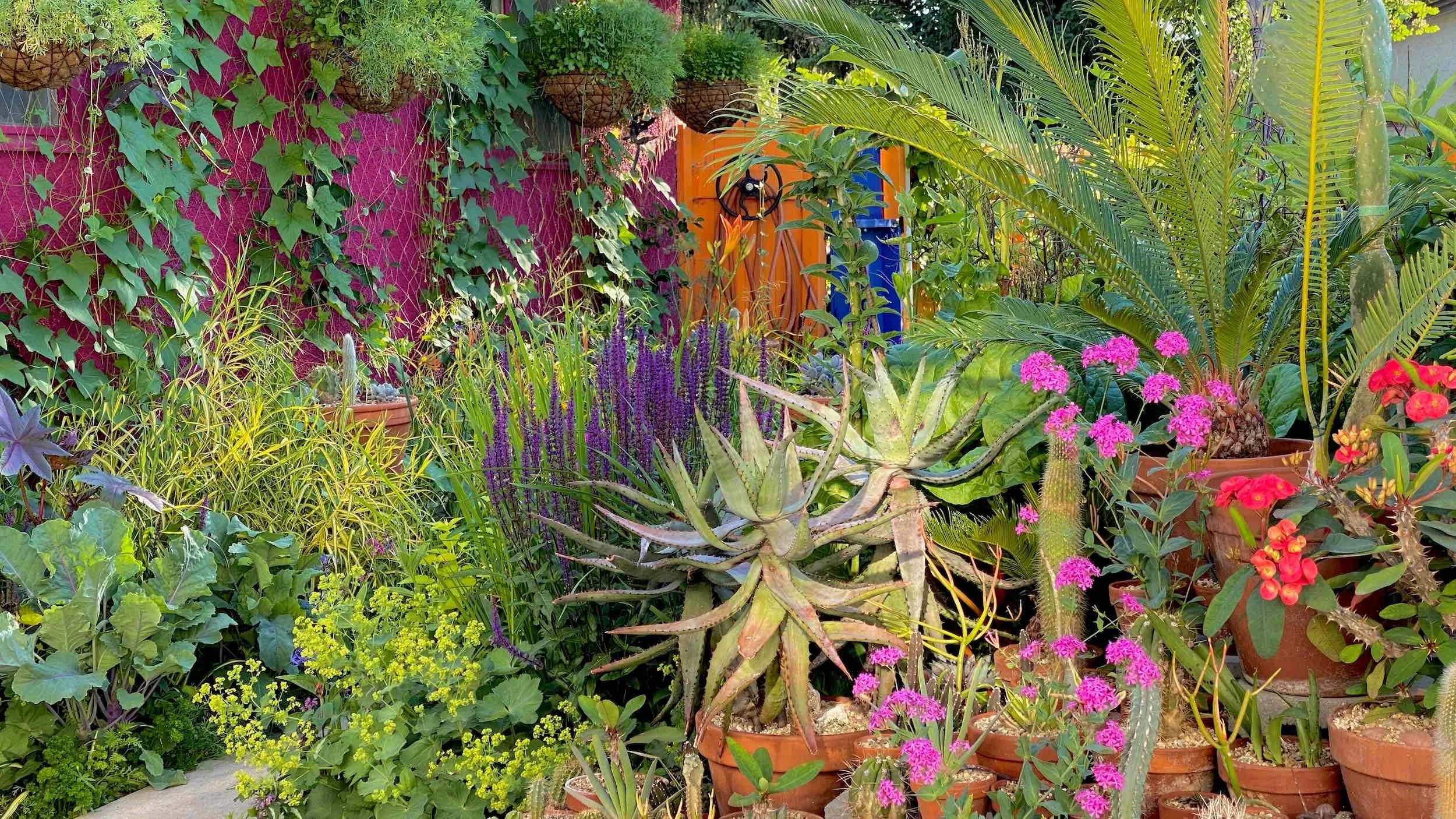
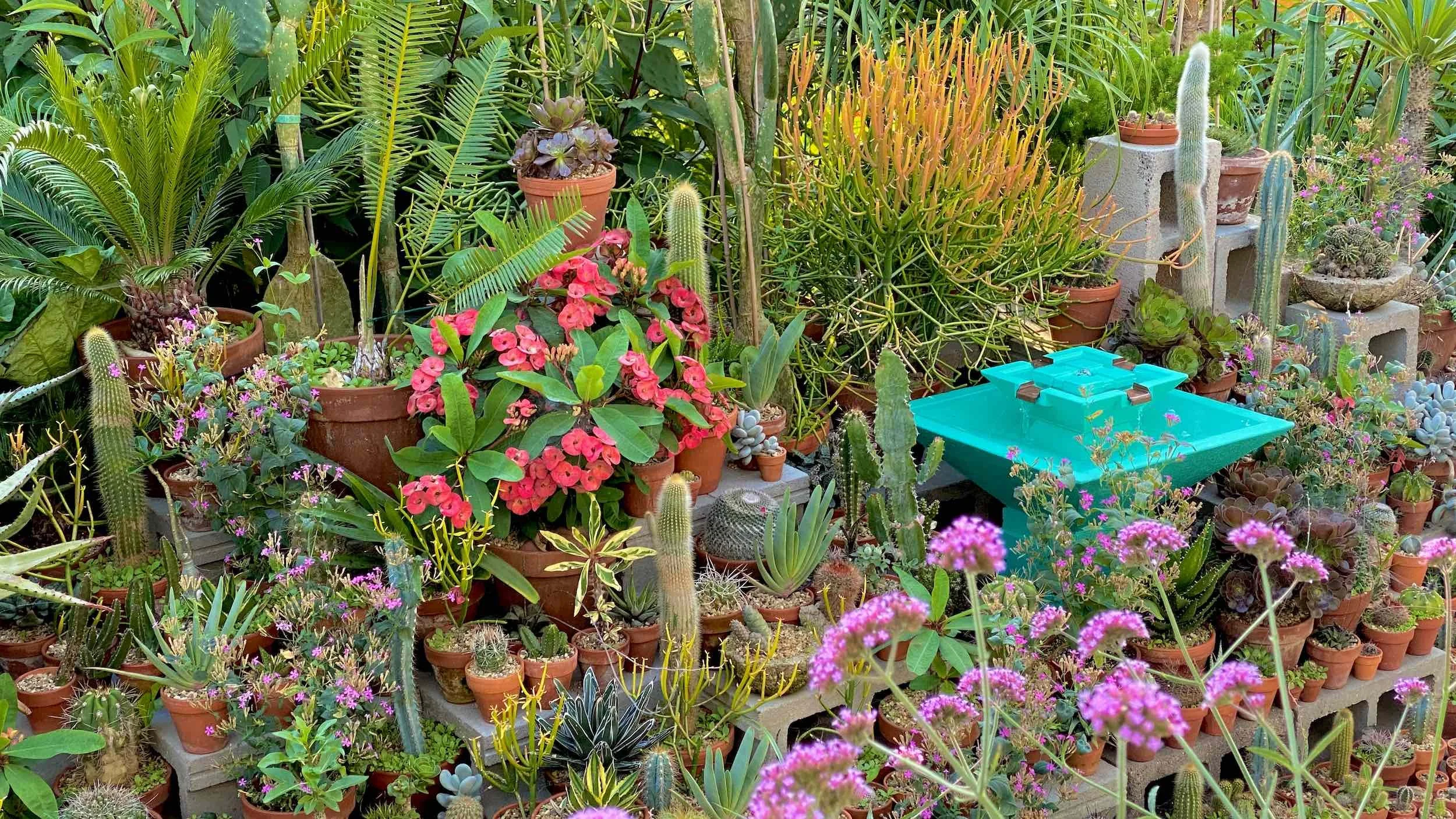
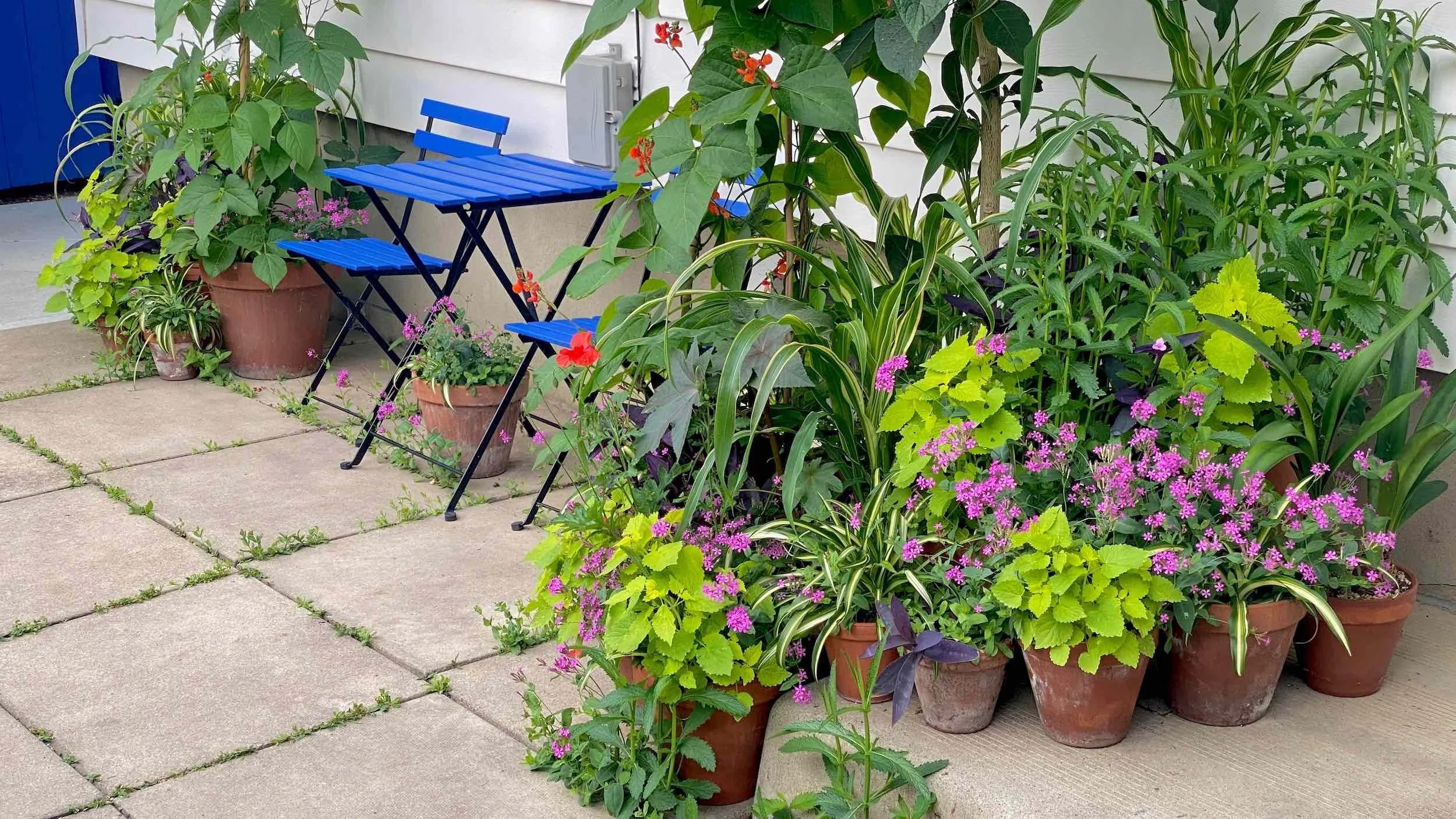
The Patio Garden is the most theatrical room in the Hannemann Garden. After passing through the narrow Dry Edge, the space opens with a burst of colour, containerized plants, and architectural succulents. A bright, cyan fountain is encompassed by terracotta pots arranged on cinder block tiers. Together with bold, painted surfaces, this creates a completely different atmosphere from the surrounding meadow and woodland-inspired areas. Although this zone feels more exotic, expressive, and display-driven, it is still part of the same experiment of learning how plants grow, combine with others, tolerate stress, and create memorable, human experiences.
This space continues to evolve each year with the goal of transitioning toward a more perennialized, alpine, and dryland planting aesthetic.
6 | Woodland Garden
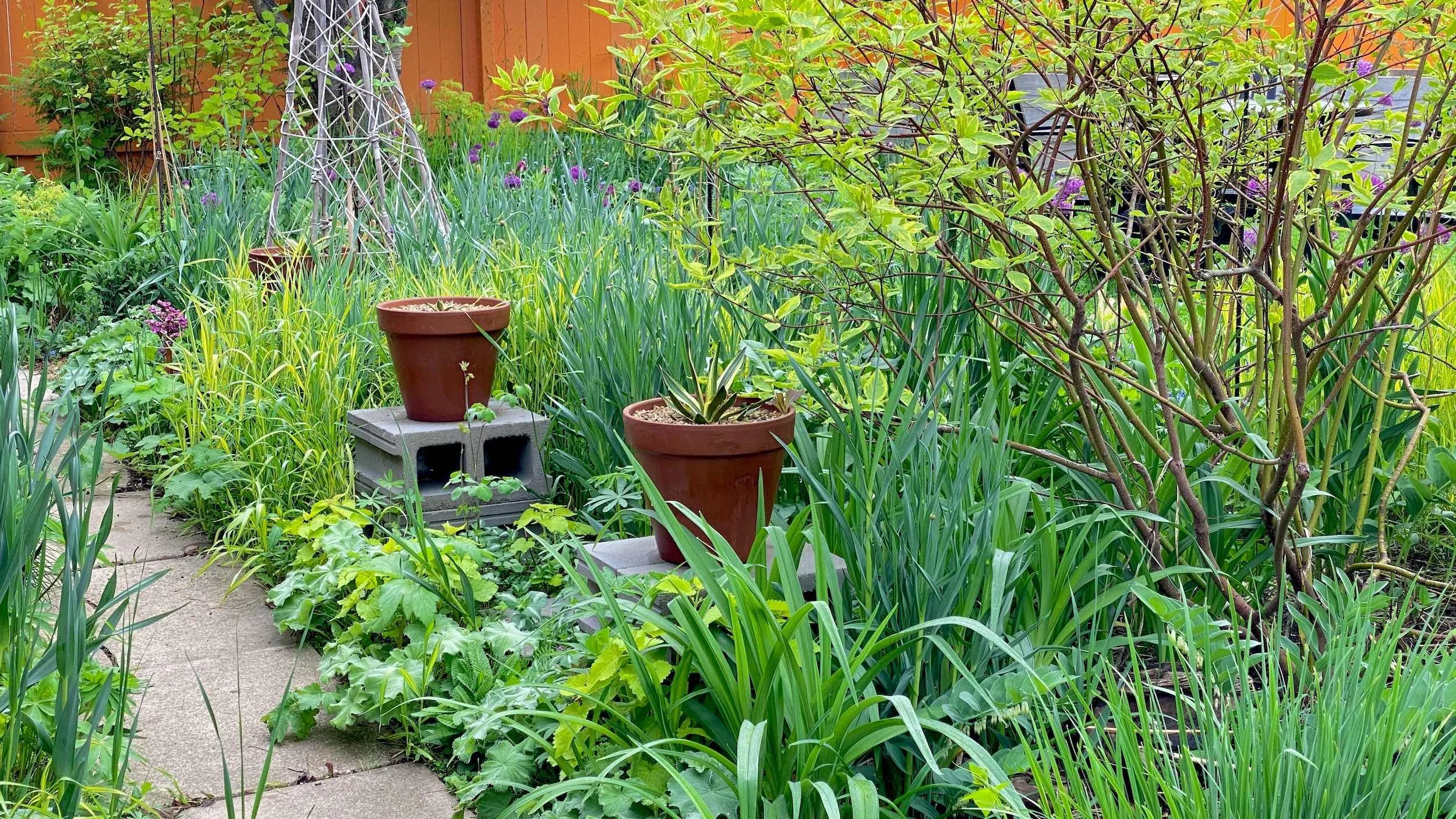
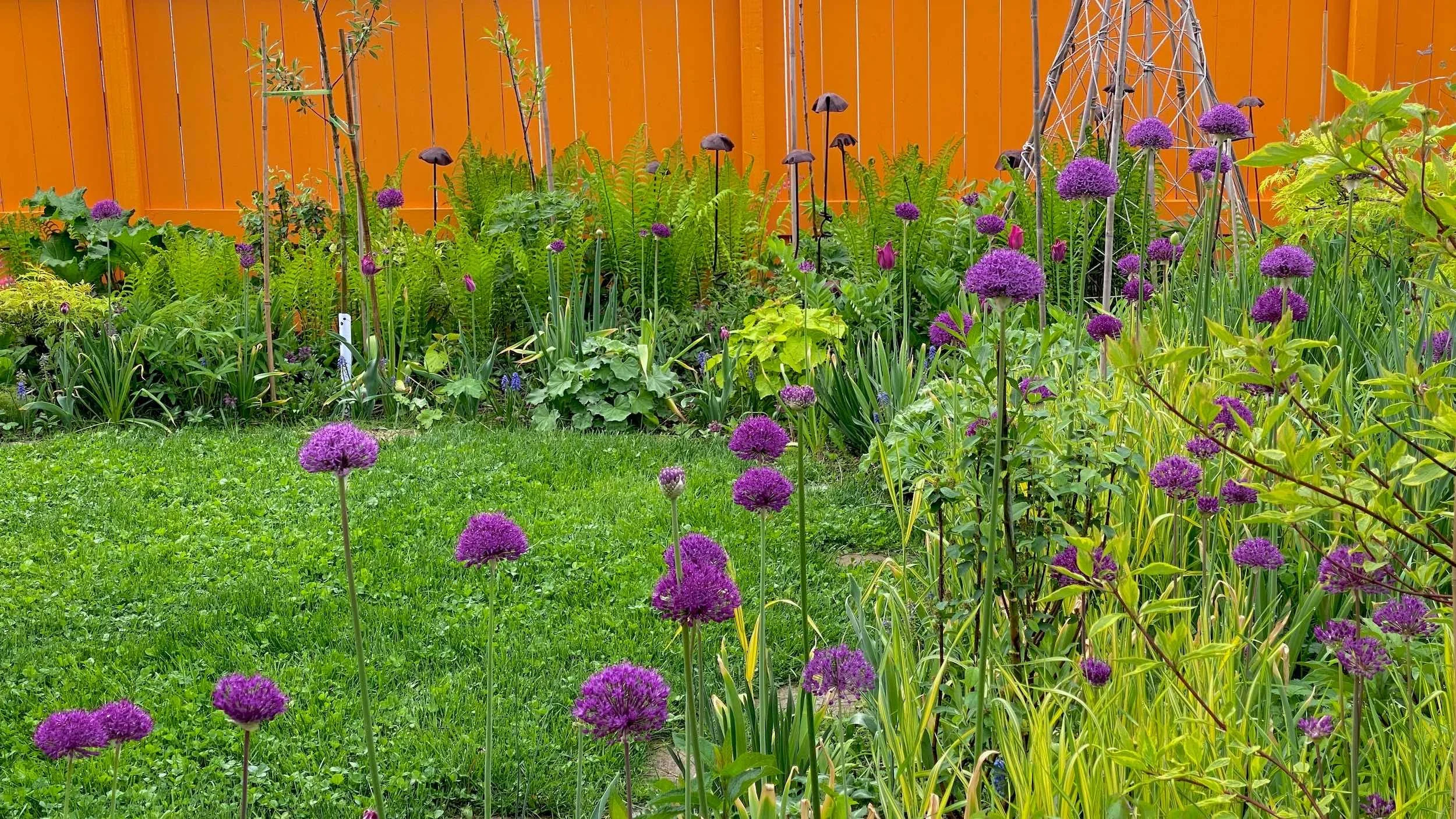
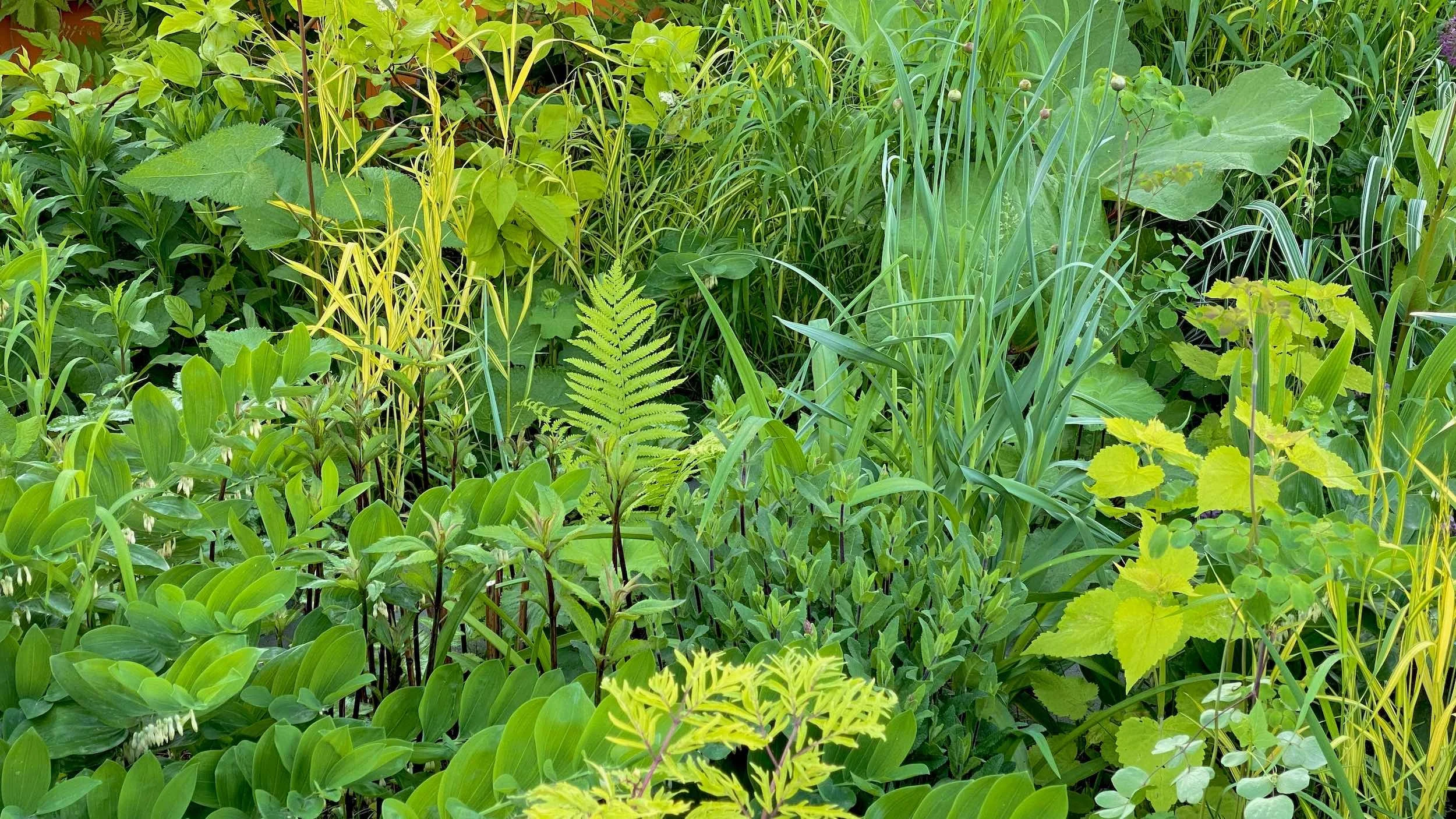
Inspired by native woodlands and mini forests, the Woodland Garden represents one of the newest, long-term directions within the Hannemann Garden. This area explores how numerous small, upright trees, shrubs, vines, and woodland edge species can enclose a small space and provide shade, privacy, and a distinct sense of immersion. Prior to introducing trees, the beds were widened, leaving a calm, centralized, oval-shaped lawn for resting, gathering, and dining.
7 | Production Zone
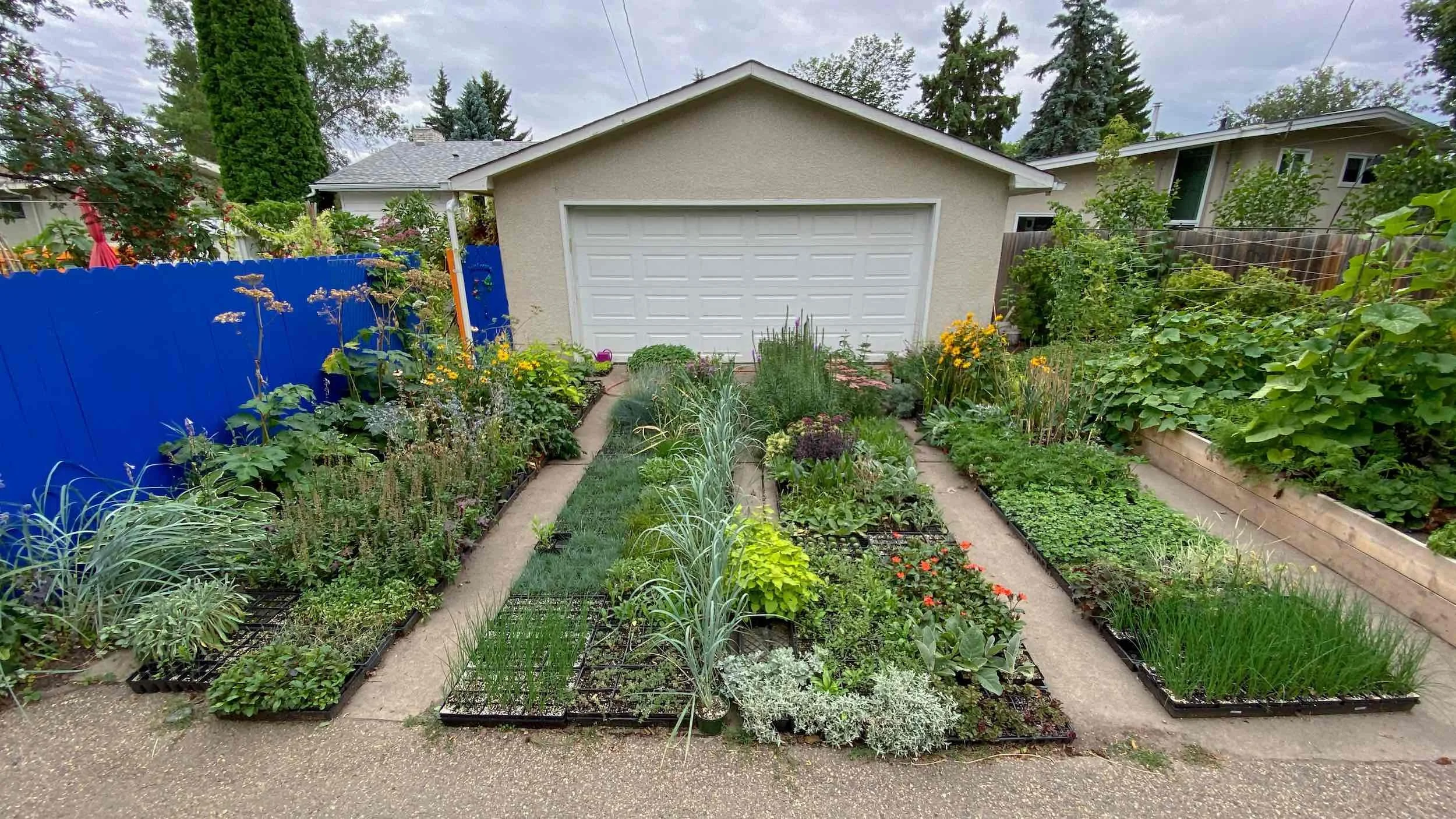
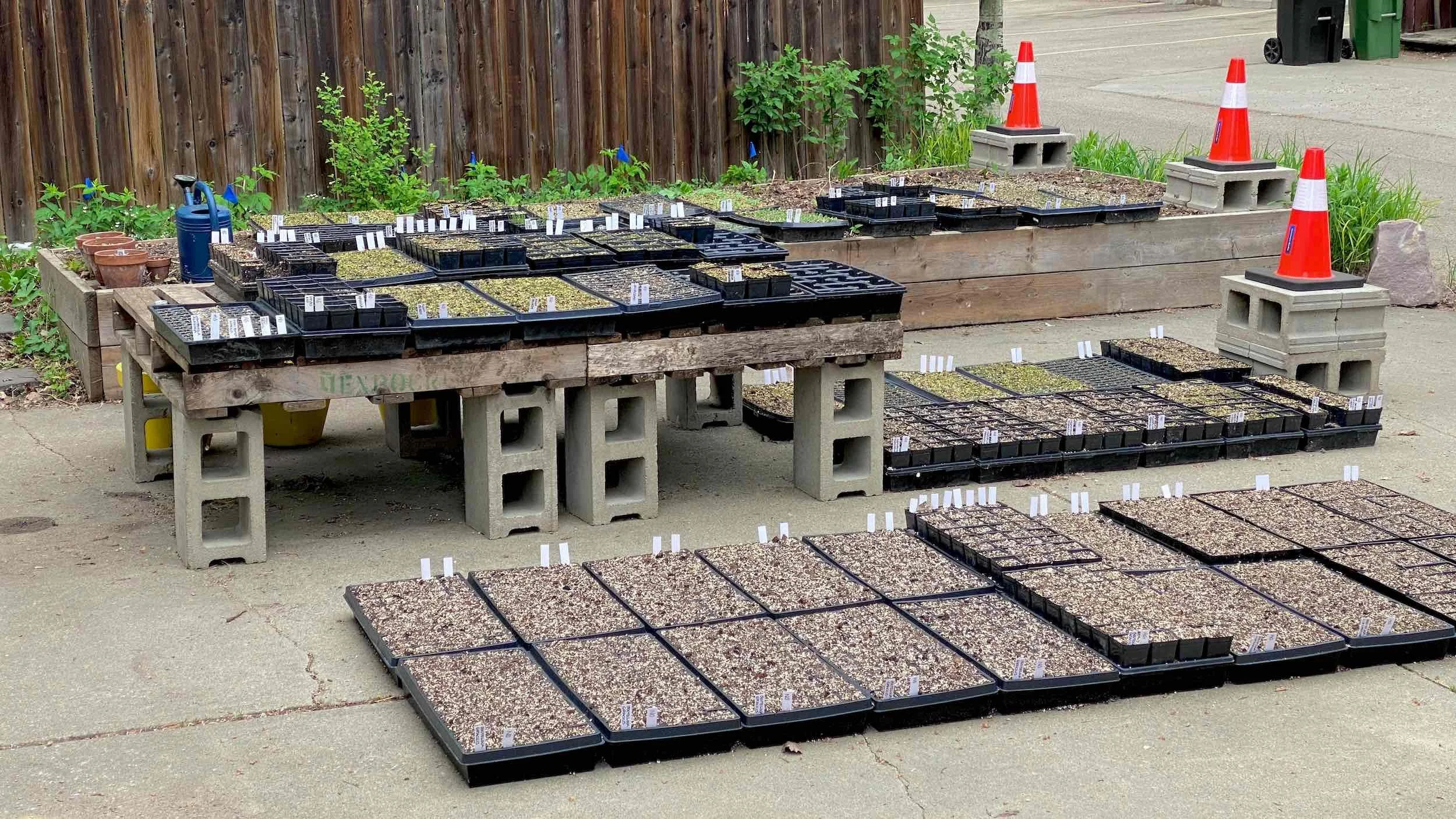
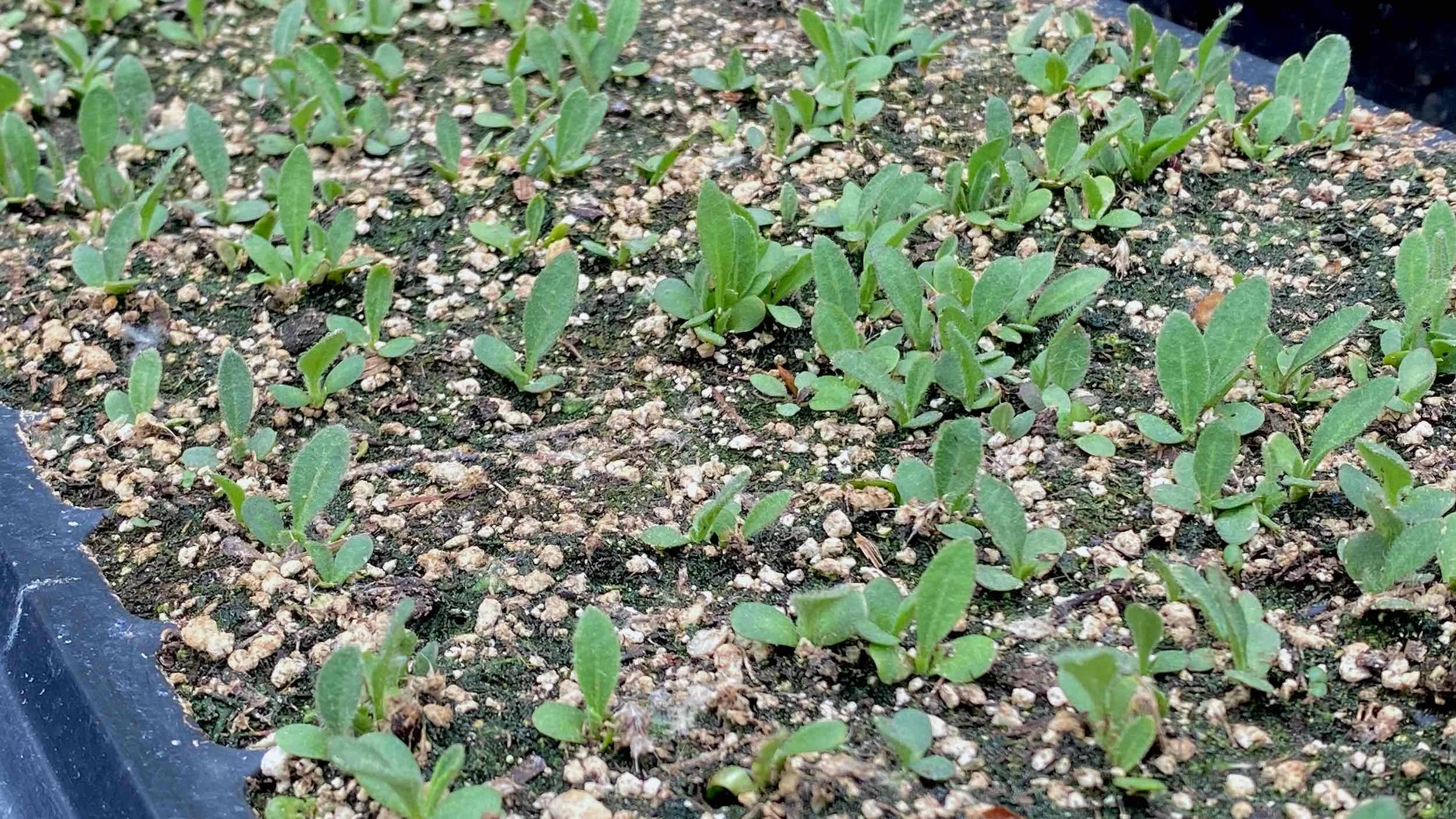
The Production Zone is the back-of-house system behind the garden's abundance. The driveway and raised bed are repurposed each spring to propagate thousands of plants from seeds and cuttings in plug trays. Within a few months, dozens of species can be grown into small, easy-to-install plugs for ongoing garden development, research, and select PolyFlora Studio projects. Beyond the work of design and planning, plant-rich gardens require a practical procurement system to obtain thousands of plants, including native and rare species, and those new in cultivation.
8 | Alley Edge
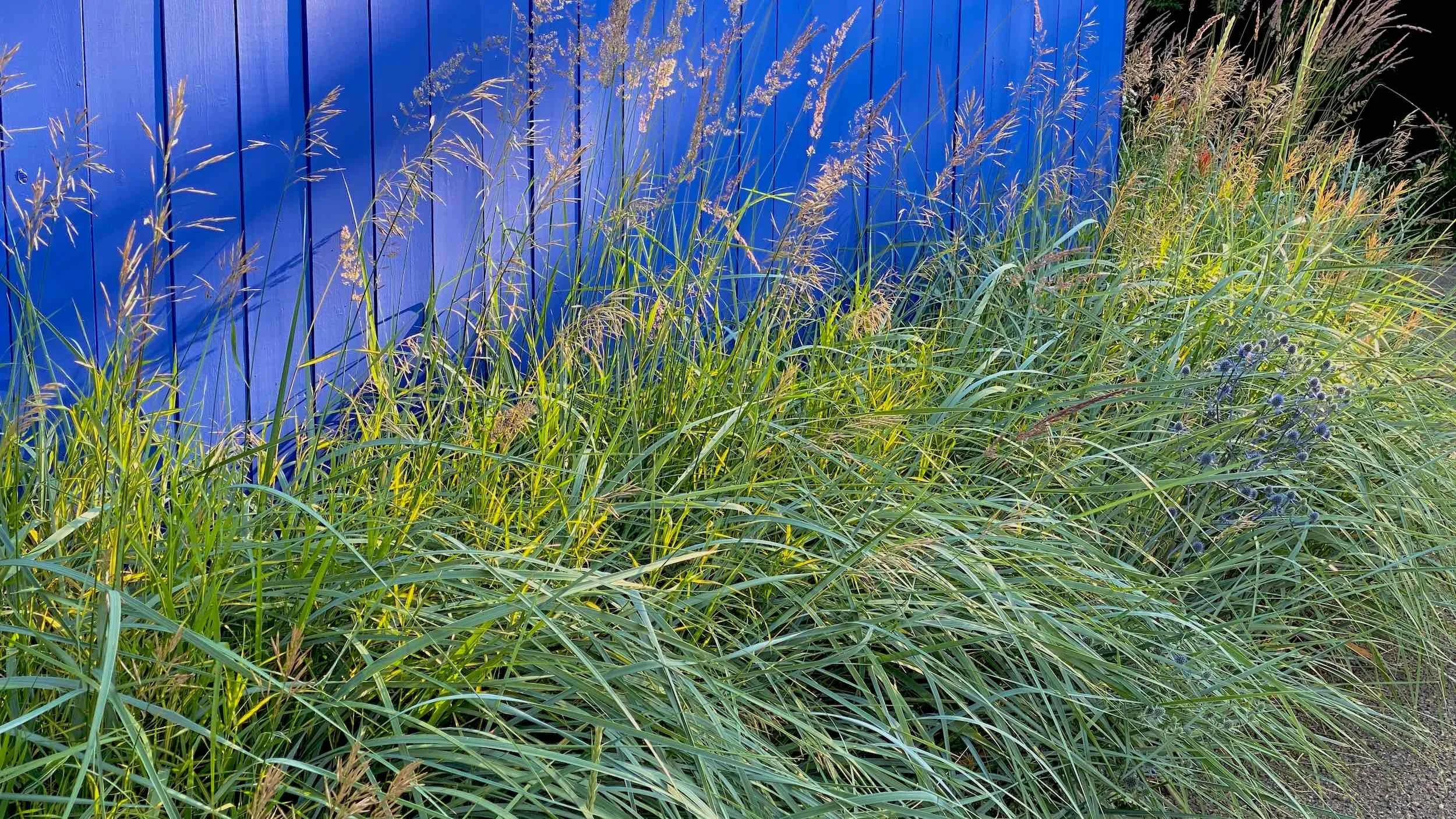
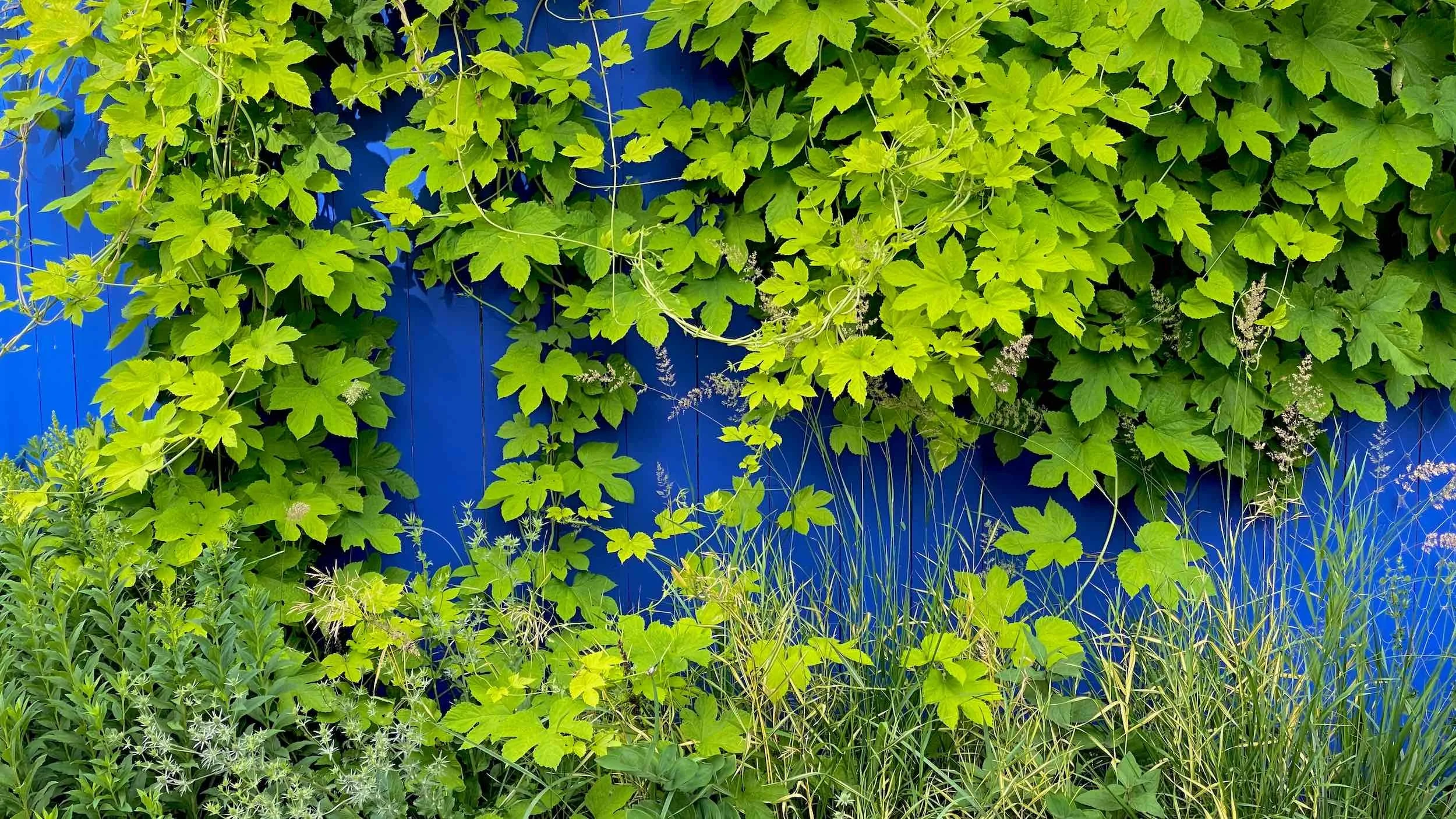
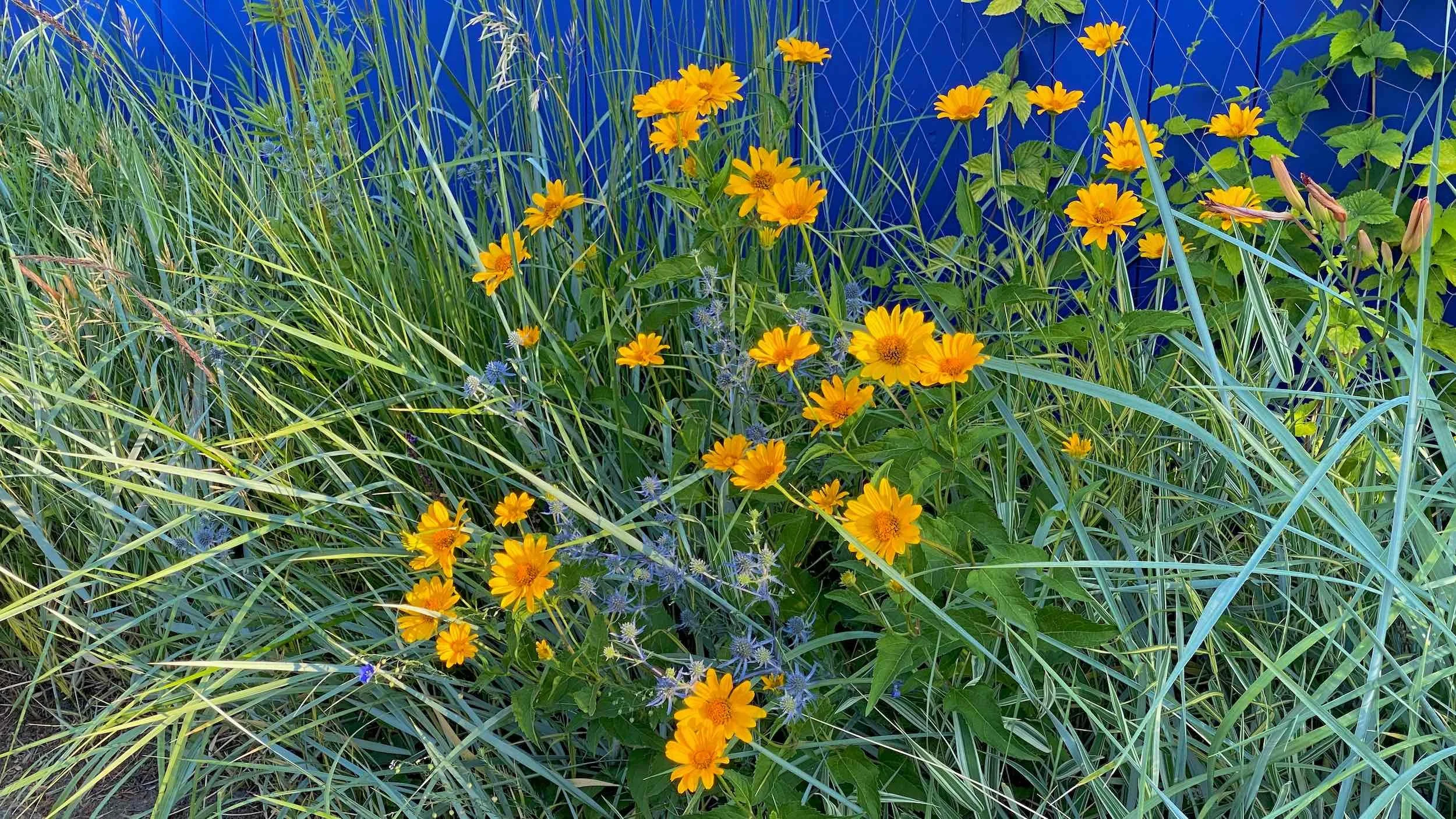
The Alley Edge planting is an antidote to neglected urban infrastructure. Just because this area experiences heat, drought, weed pressure, soil compaction, and frequent disturbance throughout the year, doesn’t mean it has to look like it. This planting is not irrigated and receives very little care, yet is still a diverse, visually engaging plant community. ‘The right plants for the right place with the right system of care’ is the guiding maxim in action here.
9 | Meadow Edge
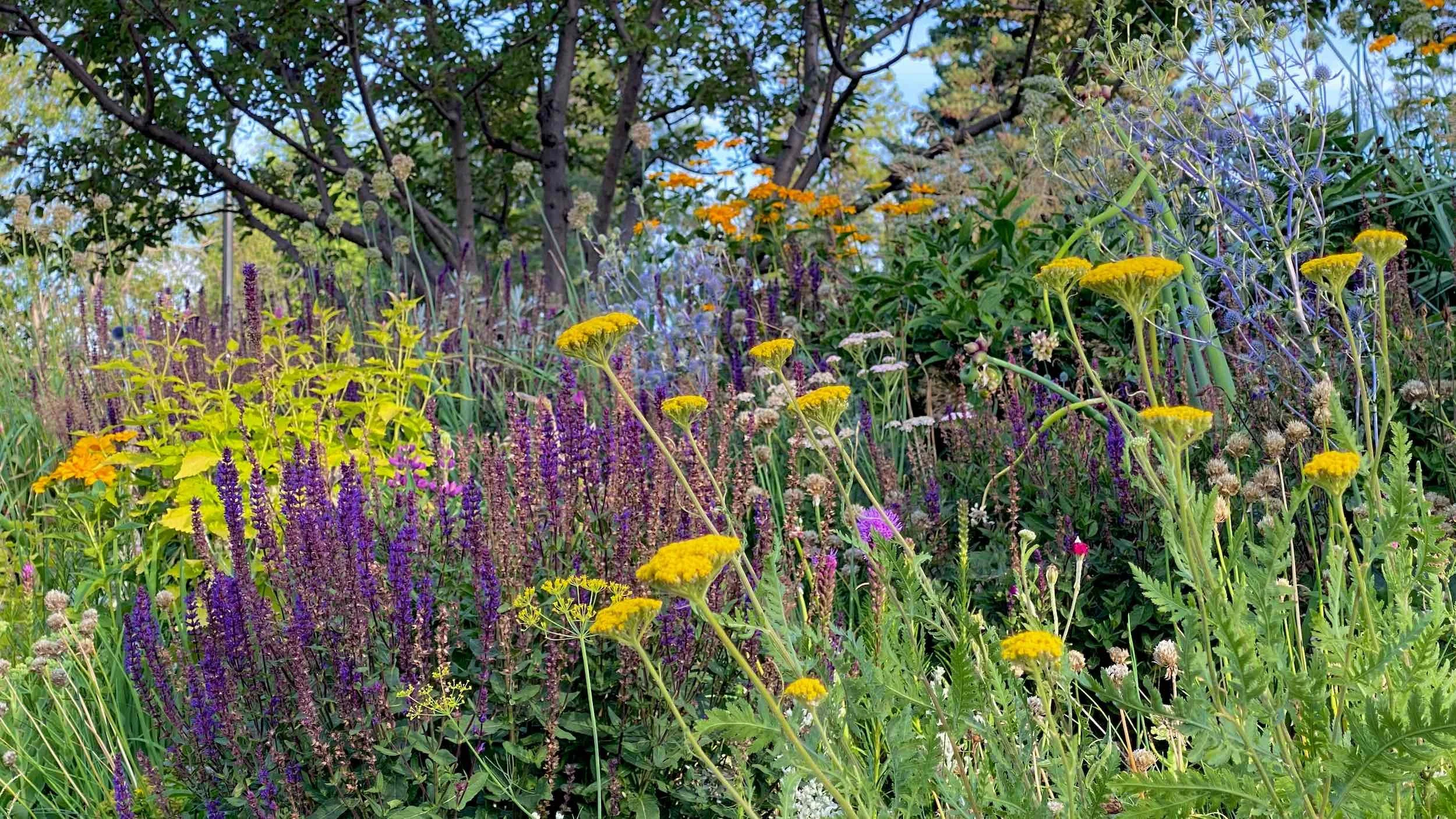
The Meadow Edge connects back to the Front Meadow. After exploring the Hannemann Garden in full, systems, relationships, and design choices may be more apparent. For example, the garden:
has curated zones and transitions
has intentional layers of vegetation
has dense, interwoven plant populations
uses patterns, drifts, and spontaneity
has dynamic seasonal expression
fosters regeneration and ecological succession
requires coexistence between species
embraces a nature forward sense of place
is a site of praxis.
Behind this garden is a methodology called naturalistic planting design. This is an interdisciplinary approach sitting at the intersection of design, horticulture, ecology, and management. It unlocks a new way to create gardens and provides new lenses for how we see plants, landscapes, stewardship, and the living world around us.
Outro
The Hannemann Garden continues evolving each year. Plants lead the way as they grow, compete, adapt, migrate, and decline.
This garden is carefully stewarded long-term by guiding natural processes, rather than fighting them. Observation, experimentation, plant propagation, and editing are a regular part of the routine.
This intimate work affects not only the garden’s appearance, but the gardeners’ perspectives, too. For us, the garden accentuates questions of responsibility to the living world and community, and expands a sense of what spaces and places can become.
Thank you for visiting!
Nathaniel, Claire, and Nancy
Create a Garden Like This
PolyFlora Studio offers naturalistic planting design services focused on creating resilient, immersive, ecologically rich gardens for residential and select public projects.